Camping, in American Haiku

Warning- primitive road.
Three adventures,
Continue on.

Path unknown,
Rocks threaten.
Meadow offers rest.

Yellow flowers,
Shine as bright as the sun.
The pines enjoy both.

Humming bees,
Racing by.
Unaware it’s vacation.

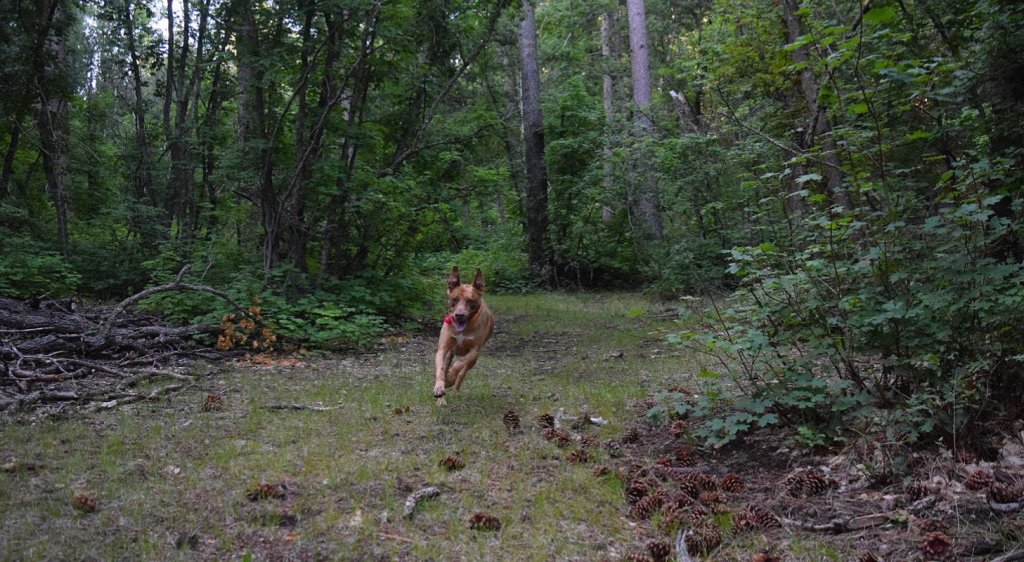
Domesticated animal,
Turns wild.
Free as the wind in the trees.

Turkey vultures,
Soar.
We are not what you are looking for.

Morning cool,
Turns afternoon warm.
Hikers: thankful for shade.

Large ears turn to listen,
She hears no threat.
Her hoves saunter on.

Catahoula watches grazers,
Very respectful.
Good boy.

Four cows,
Sixteen stomachs.
Understandably you eat all day.

Drifting in the wind,
On paper wings.
Flutters by.

The butterfly lands,
And waves.
I wave back.

Sun setting,
Storm threatens.
It’s thunder shakes the mountain.

Trees sing lullabies.
The gently falling rain,
Keeps tempo.

The fire dances.
It’s movement,
Warms three hearts.

Morning fog.
Sunbeams kiss wet leaves,
Shimmering.

Traveling along – primitive road.
Three adventurers,
Returning home.

Path now known,
Rocks permitting.
Meadow wishes best


The American Haiku is a simple three line poem without restrictions of syllables or rhyming. Jack Kerouac revised the Japanese art form in the late 1950’s through the late 1960’s to adapt to Western Culture. To learn more about Jack Kerouac and his Beat Generation, visit http://jackkerouac.com/ website of UMass, Lowell, The Jack and Stella Kerouac Center for the Public Humanities.

How to Use Movement to Improve Your Mood.

Motion is emotion.

When I first heard this phrase, I quickly shrugged it off. It was a week of increased seizure activity, and that particular day was exceptionally challenging. Fatigue was causing my ability to move to almost be non-existent. My mood was so low I couldn’t fathom experiencing any other emotions. 

However, my partner, being the wonderful support he is, never left my side. He continued to remind me that motion is emotion. He was trying to encourage me to move up and out of the dark place I was in.

Shifting our thinking when feeling negative, anxious, or depressed can be a daunting task. When it comes to shifting our mindset, we remember my partner’s advice: motion is emotion.

Consider Newton’s first law of motion is a perfect example. “An object at rest stays at rest..” But this doesn’t mean it will stay like that forever. To jumpstart that movement, start with the basics.

Stick to the basics. Have you moved your body? Have you felt the sunshine on your face? Have you brushed your teeth? Have you had a meal/snack? Have you taken a shower?

Yes, these might seem like little things. But, these little things inspire bigger things. How?
Because they do matter. You may not be aware that they matter on most days. It is on that day that you feel your worst, that you can notice the biggest difference when you accomplish these little things. 

If you want to change the world, or even if you want to change your own world, you must start at the basics. Initiate that forward motion. referring back to Newton’s first law, it also says “…An object in motion stays in motion unless acted upon by an unbalanced force…”

Starting may be difficult, but continuing is easier. I promise; it’s physics. There may be times that an outside force (like seizures in my case) may slow, or halt your motion. But remember, motion is emotion. 

If you have read it this far, I want to remind you that you are amazing. And you have the ability to take care of yourself and tend to the basics. You are worth it and your mental health is worth it.

And when you complete the basics, just know that I am proud of you. I am grateful I have you to come along this journey… Join me won’t you?

What movement helps you when you feel stuck? Share your ideas in the comments.

Chronic Illness: Expectation vs. Reality

Managing social expectations can be difficult when you have a chronic illness. Social expectations of what your illness “should” be like, can be greatly influenced by things seen on TV and movies. Unfortunately, many illnesses and disabilities get portrayed in just one way. And that depiction can sometimes be the only experience of an illness or disability someone has in their life.

You may have seen commercials for new medications that  have actors portraying your chronic illness. Sometimes it is hard to see a person in the commercial doing all these things that you cannot. People in those commercials always seem to have a positive attitude about their condition. 

You might see things on social media of people accomplishing milestones that you’re worried you may never get to. It is okay to feel frustrated. It is okay to feel hurt by other people’s experiences. No two people, and no two journeys are alike. 

What can we do to help when we are feeling like that?

Recognize how strong you are. Say to yourself “this is really hard, but I am working on it.” You are here in this moment, and you know what that means? You have been brave enough to not give up or give in to your disability or chronic illness.

Allow yourself to feel frustration, disappointment, anger, etc. Don’t let somebody tell you that your emotions are bad or invalid. You are going to feel, however you are going to feel. Practice not pushing the emotion away, or pushing the emotion down. But also practice not clinging to that emotion or holding grudges. I say practice, because this will take time to get better at accomplishing.

Focus on what you know to be true in this moment. Try to avoid thinking only in extremes. For example “I never will” or “it is wrong that” or “it is not fair that” are parts of extreme thinking. Remind yourself of the good you have right now. Read more about stating your one good thing here.

Finish by thinking of pleasant things that you can do today that makes you feel good. And acknowledge how amazing and wonderful it is that you can do that. There are many activities that can bring joy that don’t require much effort, but can bring much joy. Can’t think of anything off hand? The following list contains Covid-19 restriction friendly suggestions.

  • Singing (regardless of talent level)

  • Talking with a friend (on the phone or in person)

  • Day dreaming (stick to good thoughts)

  • Gaming (board or video)

  • Playing with pets (this is good for them too)

  • Reading (books or blogs – like this one!)

  • Napping (one of my favorites)

  • Learning something new (language, hobby, musical instrument)


Here is my example of using the above technique: I see people who are days, months, and years seizure-free via social media. Right now in my life I’m lucky to go a couple of hours seizure-free. Therefore, I can feel quite discouraged and jealous at times.

But, the fact that I can help bring awareness about the different experiences people have with epilepsy, and other chronic illnesses makes me feel proud. Helping more of the general public be aware that not all epilepsy looks the same, is very rewarding. 

My hope is, with more education, social expectations will be more realistic. My truth in this moment is: I know I have the capability of reaching towards that goal, with this blog. It is hard, but I am working on it.

Having a chronic illness comes with a lot of unpredictability. You may not know what the future may hold. But together we can work on bringing more joy and comfort in the now.

What are some frustrations you experience with your, or a loved ones chronic illness? Do you think you will try what was discussed above in those moments? Feel free to share in the comments.

Dallas’s Story

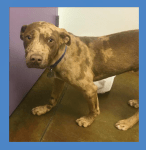
My partner “happened to be” looking at adoptable dogs on the Animal Humane website. He turned the phone to show me a picture of a catahoula puppy. He looked pathetic: skinny, scared, in need of support. Dallas was his shelter name. Something drew me to him immediately. I saw him the next day.

Skinny, scared, young catahoula dog.
Actual picture published on the Animal Humane website.

Animal Humane has a survey about what you as an adopter, are looking for in a dog. My answer: one who could go on outdoor adventures, travel with me, be my best friend always. When the employee asked if I was there to see someone in particular, I said Dallas. She laughed and said “you are not going to get all that from him!” My husband and I were confused as to why she would say that.

They put us in a greeting room, and we waited as they went to go get him. One he came in I realized what she had meant. He was being carried, unwilling to walk.

Being abandoned during critical development puppy years clearly caused some damage. At only 6 months old, he was frightened by the world that had been so cruel.

He laid on the floor in a little ball, untrusting, understandably. Attempting to not stress him more, we waited for Dallas to feel safe before I tried to pet him. Therefore, my husband and I sat on the floor next to him, and calmly had a conversation.

It took 25 minutes for just one leg to relax. Even then, treats we offered him were highly suspicious and gentle touches caused flinches.

We eventually moved to an outside space, and by that I mean he was carried, while I walked. Outside he was more comfortable; he was on all fours and he interacted much more. Our presence was becoming more tolerable to him. Surprisingly, he actually wanted loves, then he would go sniff, and come back for more loves.

At one point a bird flew towards us causing a very visual and emotional reaction from me. (I have an irrational fear of birds). Dallas immediately ran over to me to see if I was okay. I knew I was bringing him home. 

My parents and their dog are a big part of my life, so a meeting with them was crucial. Like always, their dog enjoyed having a friend. However, afterwards, my parents told me I was crazy to take on a dog that would require so much work. I didn’t care, I already loved him. 

He did require work. At home, everything was new and scary. Open doorways were impassable, floor changes were debilitating, learning how to be a dog was overwhelming. 

I hired a trainer for assistance, which was life changing for the both of us. He helped us in experiencing the world in a safe and confident manner. One session he mentioned how wonderful Dallas would be as a therapy dog because of his empathy.

Taking that opportunity, I asked how well he would be as a service dog, revealing that I have epilepsy. That was not something I did comfortably at that point in my life. Epilepsy was not something I had accepted yet. My trainer assured me that medical alerting would be a job in which he would excel. 

In only one year of training, Dallas was confident and proud! He was alerting me before episodes, and keeping me safe during seizures. Adopting him that day at Animal Humane I knew I was saving him, but I could never have expected that he would be saving me. We go on outdoor adventures, he travels with me, and he will be my best friend, always.

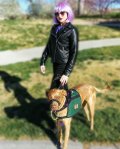
Woman and service dog
Dallas at the Walk to End Epilepsy 2019 with Sāb.

If you would like to donate to the Animal Humane visit their Donation page. Or volunteer at your local shelter.

5 Things to Keep You Safe During Reopening

The world is beginning to open back up. However, this does not mean that the virus is gone and everyone is safe again. Here are 5 simple things to keep yourself as safe as possible while entering into the new world.

  1. Practice good hand hygiene. You have done so well in the past 2 months teaching yourself to wash your hands efficiently and completely. Don’t let that great habit die! 
  1. Continue to wear your mask while in public. Don’t touch your face or mask unless you have freshly washed hands.
  1. Keep physically distanced in public spaces. Is the beach absolutely packed and you have to sit within 3 feet of 3 different groups of people? Maybe you can soak up the ocean fun another day. Be flexible on your adventures, and aim for more open space and less crowded places. It may be disappointing that plan A was a no-go, but plan B is just as exciting! Just be sure to plan for both before leaving the house.
  1. Take advantage of contactless pick up/ delivery. As more people are out and about, more people are exposed. It is great that your favorite restaurant is back in business; but the best way to support the community is to keep yourself and others safe and healthy.
  1. Trust your gut. Only you know what is safe, and what is too risky for you. Don’t feel pressured by friends and family to go out if you feel like it is too soon. Be honest to the people in your life; if they love you, they will understand.

What are your plans now that things are opening up? Feel free to share in the comments.

How to Focus on the Positive (in a time of Negativity)

“Just focus on the good”. – Advice I’m sure you have heard before.

Kind of a hard thing to do right now in the world. All the scary and bad thoughts that can easily occupy your mind. Everything and everyone is focused on the Coronavirus how terribly it is affecting the world. So if everyone and everything is having you focus on the bad, how are you supposed to get your mind at ease, and off of this pandemic?

The simple answer: change of mindset.

The better answer: small steps can help in changing your mindset.

This will not happen overnight. This is something that takes practice, and dedication. Dedication to see the good. This does not take more than a few moments, and you don’t need any special equipment. 

Right now change of mindset might seem like an overwhelming task. But all you need, is one. One good thing. 

How do you find your good thing of the day?

First assess who you are, where you are, and what you have in this moment. 

Is there someone in your life that is always your support? Have you accomplished something that maybe was a bummer doing, but you are proud that it’s done? Did someone say or do something that made you smile? 

Even if you’re something good is simple as: I had good snuggle time with my dog today. That’s where I need you to start – smallest things. Overtime reflecting on your day it will get easier, and you will find more, or bigger good things. I promise.

Enlist the help of your family and friends to start getting in the habit reviewing your one good thing of the day.I practice at the end of every day with my husband. But as long as we have been practicing, even we found we forgot to think of our one good thing, once this virus stopped the world. 

But being dedicated to our mental health, we picked it back up. Don’t let a slight lapse in practice discourage you. Just start again and let you one good thing of the day be that you are back focused on remembering your one good thing!

You’ve got this, friend. So go out there, and be prepared to start counting your good things!

Anything you can think of right now as your one good thing? Share it below in the comments.

Dog Days of Quarantine

Physical (formerly known as social) distancing is important to keeping yourself safe and healthy. However, it can get lonely, and let’s admit, even downright boring staying at home. We at least have the ability to watch movies, cook, bake, and play games to keep us from going stir crazy. But what about Fido?

We must remember our furry friends during this isolation process. Filling their basic needs of shelter love and food, may not be enough during this time. Meaningful interactions and continuing to maintain social order in the home help keep your dog calm and less anxious through this big change in his life.

Routine

Routine is important for dogs. Now that we find ourselves at home for a large amount of time we need to establish new routines. Did you used to feed your dog every morning right after you showered? Maybe you can incorporate the same ritual but in different steps. 

Now that you are waking up later, you can feed the dog right when you wake up. This gives you time to hang out in your PJs and drink a cup of Joe before you shower. It may take some time for doggo to get used to, but in time he will realize this is the new normal. 

Walk

Although we are practicing social distancing, most of us in the United States are still allowed to leave the house recreationally. This means we can take a S-T-R-O-L-L! We have to spell the word “stroll” because the dog now knows how to spell walk, and knows what it means. Scary, sometimes, how smart they are, right?

If you decide to take that walk, be sure you pass people on the sidewalk with at least 6ft between. Do not go to dog parks, or other highly visited spaces. 

Play

Although we cannot visit public spaces like dog parks, it does not mean that Fido cannot get the excitement of play. They need the mental and physical stimulation in order to regulate their behavior at home.

A longer walk can tire Fido out. If you take a longer walk, be sure to listen to your dog’s body language and not expect too much from him in the beginning, if he is not in shape. Work up slowly to longer walks. 

For a change in pace, try a short activity at a higher energy level. Maybe you have been itching to dust off those old roller-blades, skate boards, or even bikes out for Pups to run beside. Be sure you teach him how to join you safely to avoid getting tangled up. Don’t forget your safety gear! While you both are having fun, be sure to pay attention to his body language to know when to stop, and let him set the pace.

Bath

Hygiene is imperative, more so now than ever, and not just for those of us without paws. A dog’s skin health is a big influence in overall happiness. Perhaps you took Puppers to the groomer every week. Now that you are sheltering in place, a trip to the groomer is not feasible. 

If an outside bath is possible, try to reduce water waste by running the hose in the lawn, or dumping bath buckets in the garden. Before putting the used water in the lawn or garden, check to see if your dog shampoo is safe for plants.

Perhaps an indoor bath is preferred. If bathing in a sink or bathtub, clean the surfaces after use and check drains for hair clogs. At my house, my husband has to pull out the big clogs – I just don’t have the stomach for it!

Treats

Speaking of stomach… It is hard to resist those puppy dog eyes! I know I have fallen victim to them plenty of times. But we must resist. In order to keep Dog at a healthy weight, we can not overdo it with constant treats. 

Encourage good behavior with treats. Use treats to teach a new trick or brush up on service dog assistant tasks.  As long as treat giving remains constructive, it is unlikely that you will overdo or over indulge.

Personal Space 

Personal space is something that is important to us all. Having the family home all day can be stressful on your dog. We need to respect their personal space as we expect them to respect ours. Love and affection is wonderful to give a dog again but make sure to notice their behavior and understand when they need a little bit more space.

A Brave, New World

We all wish that we could speak to our animal and explain what is going on in the world. We want to tell them that although we are stressed and scared there is no reason for him to be, because we will keep him safe. But we cannot speak to them, which is why it is so important to let our actions do the communicating.

It is a weird, weird world, and it is constantly changing. For the foreseeable future, this is the new normal. If we remain confident our furry family will settle in with us.

Because the best way to lead is by example.

Purple Day and Pandemic 2020

It is scary living with a chronic, uncontrolled illness on a normal day. With the emergence of COVID-19 (coronavirus), it is easy to feel incapacitated.

The need to put your health care first, especially when you have loved ones that need care also, can be difficult. This conundrum has put me in a tough situation. 

The smart doctors and scientists of the world are recommending physical (previously called social) distancing, and to self-isolate if you have symptoms. I don’t have symptoms – yet. And I am not kidding myself by thinking I will not get sick from this.

They are estimating 50% of people will get COVID-19. If I look at my household, between my husband and I… I will be the one to get sick. 

However, I think the best thing I could do right now is to stay at home, isolate myself for at least the next two weeks, and wait to see how the world is then, to make a plan moving forward. Seems really safe, right? 

Not actually. 

My husband still is going to work, as he works an essential job and is at low risk of infection. Because he is my main caretaker, he is the one having to go get my medications, and the household supplies. That puts him out there.

That means he is at a higher risk of contracting the virus, period. Then he comes home to me. We have a “decontamination room” at the back of the house where he strips down and sanitizes. That can only do so much. 

Regardless, he has still been exposed and therefore is exposing me to the virus just by being in the house. Not to mention our wanting to snog transfers all viruses and cooties. 

So where do we draw the line? Where do we find the comfort of “I’m doing everything I can” and keep the practicality of “I still have to live my life.” 

Maybe just holding on to the hope that the majority of the world is also practicing social distancing and washing their hands frequently and effectively, is all that we have right now.

Please, consider sending a text, a tweet, a DM, or video call to the people in your life that you know are supporting people in the high risk group. Thank them for helping reduce the curve. And a big thanks to you, if you are that person.

It is fortunate that I have a job that I can do – fairly well – from home. But it puts a burden on my fellow staff to pick up the slack on all the physical work that I’m no longer there to do.

I am ashamed telling my boss that I have to stay home; because I’m too scared of dying of SUDEP because the strain that getting sick puts on my uncontrolled brain. I need to thank them more, for holding the front lines, and being so understanding.

I want to thank my friends, my in-laws, and my parents, for not taking it personally when I tell them I can’t physically be with them for the unforeseeable future. I appreciate and love all of them.

I hope you feel that kind of support from the people in your life. 

Who do you appreciate the most right now? What do you find most difficult in these troubling times? Share with us in the comments.

Hello World!

This is my first post so bear with me!

Nice to see you here! My name is Sāb (like babe but with an S). I have epilepsy with unusual seizure activity. It is uncontrolled and medication resistant.

Why did I tell you this, before anything else about me?

  • Because I thought it defined me.
  • Because I used to keep it a secret, thinking it was something to be ashamed about.

But that is a thing of the past! I now realize that although epilepsy has a big impact on my life, I have no reason to hide or be apologetic. It was a long journey to get here, and my adventure is not over.

I think it is important to recognize that it is an amazing feat, and I would love to share my experiences with you. My lessons learned, my “should’a, would’a, could’a’s” and future endeavors are the types of things I hope to publish.

Maybe you or a loved one have epilepsy, or some other chronic illness. You may find something of value hidden in my pages. I sure hope so.

I must admit, I have hoped to find some comfort out here in the infinite internet. If you have too, and you landed here, maybe there is a reason. I would love to connect.

So who am I really?

  • My educational background is in engineering
  • I have a wonderful and supportive family
  • I love to ice skate
  • My favorite place in the United States is the White Mountains in New Hampshire
  • I am looking into going back to school (for a mid-life career change)

Okay, those are just facts, not really allowing you to know the “real” me. I suppose that if you would like to get to know me, you can read my blog. Shoot, you can even contact me, and we can build a real friendship!

Regardless, I am hoping that you are willing to take this wild ride called life with me.

Stay tuned for the next episode (yes that was a seizure joke).