What change, big or small, would you like your blog to make in the world?
The vision was simple for this blog. Share my knowledge and experience surrounding epilepsy so that others may feel empowered and seen. The stigma surrounding epilepsy continues to hold much misconception.
How little did I know that my commitment to the blog only fed my feelings of failure. The fatigue of my chronic illness didn’t allow me to write on the manner and as often as I originally envisioned.
White lilacs and the color purple represent epilepsy awareness
So often with chronic illness, life drastically changes, and you find that you can no longer do something that you used to do with ease. This may not be the grand writings that I imagined, but it’s what I can do right now.
Perhaps someday, as medicine and technology advances, I will be able to do more.
If you are interested in learning more about epilepsy visit my frequently asked questions post to become informed and help stop the stigma.
Taking care of your teeth is important for everyone, but it can be particularly challenging if you live with a condition that causes involuntary clenching or grinding of your teeth. Did you know that dentin, the substance that makes up the bulk of your teeth, is the hardest substance in your body (with bone coming in second)? When you have a medical condition like seizures, it’s essential to take extra care of your oral health to avoid injuries and long-term damage. In this post, we’ll explore some practical tips to help you care for your oral health.
Photo by Pixabay
Find a good dentist. Having a good dentist as a part of your healthcare team is crucial when dealing with a chronic illness that affects your oral health. Be sure to inform your dentist of all your medical conditions. Seizures themselves can cause oral injuries. Some anticonvulsant medications have oral health side effects. Working closely with your dentist, you can help make a plan for oral health that fits your unique situation.
Get a mouth guard. Using a mouth guard can be a game-changer if you experience clenching or grinding of your teeth due to seizures. Your dentist can customize a mouth guard specifically to your mouth and needs, or you can buy one over-the-counter and custom-fit it yourself. Your dental insurance may even cover the cost of your guard, or at least reduce it. If you choose to buy one over-the-counter, just know that getting the perfect fit takes a lot of patience so be sure to read instructions that come with the kit.
A mouth guard can help prevent irreversible enamel damage caused by seizures, as well as prevent any further wear and tear on your molars. Talk to your medical professional to see if a mouth guard would be beneficial for you, and don’t hesitate to ask your dentist for advice on choosing the right type of mouth guard for your needs.
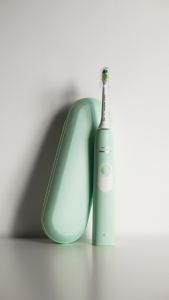
Use an Electric Toothbrush. Using an electric toothbrush can make brushing easier and more effective, especially when you’re dealing with a medical condition that affects your oral health. The oscillating and rotating motion of an electric toothbrush can help remove more plaque and bacteria from your teeth, giving you a cleaner, healthier smile. If you can afford the luxury of an electric toothbrush, it’s worth investing in one. Look for one that has soft bristles and multiple speed settings, and consider getting one with a timer to help you brush for the recommended two minutes. With proper use and care, an electric toothbrush can last for years, making it a smart investment in your oral health. Just don’t neglect to floss just because you have a fancy new tool!
What is the best thing that you have done for your oral health? Do you see the dentist at least once a year like the American Dental Association recommends? Comment below!
We all have said, and done things that we regret. We know we messed up. So how do we start the apology process? Sometimes it seems impossible.
If we break down the process into steps, and gather our emotions, it’s not.
Here are five ways to communicate that you are sorry, and have the other person feel your sincerity.
Express your regret or remorse. Something happened, and it didn’t turn out well. How do you feel about what happened? Were your actions something regretful? Do you feel utterly empty without the other party’s presence in your life? Be honest and open about how you feel about the result of what happened.
Explain what you think went wrong (without pointed phrases). Pointed phrases are statements that shift responsibility to the other party. They invalidate the other person’s feelings. An example of a pointed phrase is “I’m sorry that you were offended” or “I’m sorry, but you…” They have every right to feel what they feel, as do you. As much as you wouldn’t want them to dismiss your feelings, don’t dismiss theirs.
Request forgiveness and allow as much time as the other needs to process their emotions. Putting a time limit, or expressing an expected date of when the other person should forgive you, will most likely cause the other person to not want to even begin the forgiveness process.
Before composing: Give yourself time to be in a space where you feel ready and able to apologize. Being sincere is more important than rushing an apology. Emotions of remorse best translate in a face to face interaction. in times of COVID-19, that may not be an option, but consider a video visit. Likewise, just your voice can convey sincerity over the phone.
If you want to say sorry but feel like an in person or over the phone apology would cause more issues (ie. Interruptions, raised voices), a hand written one is better than none. No deed is too small if the relationship is worth restoring.
You are ready forgive/apologize, and move forward. How do you know the other party is ready? You won’t necessarily know. But don’t let assuming that the other party is not ready to forgive, hold you back from reaching out with an apology.
Do you feel like you need to apologize to someone? Are you going to use the tips above? Let us know, in the comments, how your apology was accepted (or denied).
My chronic illness causes constant fatigue. My body is battling itself from the inside, and it’s hard to deal with anything on the outside. Housework falls by the wayside; it is just too hard to make things happen. Everyday I got to see things getting piled up larger and larger, waiting for the time that I felt good enough to do something about it. And that time rarely comes.
One day I took a good long look at my house, and my life, and finally decided I needed to do something drastic to help me. What I ended up looking in to, was minimalism. At first I thought, “how ridiculous? I love the majority of my items in my home, I will never be able to part with them. I should just give up now.”
As I read, I found minimalism didn’t mean living with nothing, it meant living with less.
Research shows brain fatigue increases when it has to process more in an environment. Brain fatigue means body fatigue. Studies have found that clutter in a space raises cortisol levels. Cortisol is your stress hormone. Therefore clutter hits you with a double whammy, to your physical and mental health.
The more I thought about it, the more it started to look good for my epileptic brain. With things being simplified and reduced in my house, my brain would not need to use as much energy (because it really does not have any to spare).
So, this is where we started.
Chalk board reminder if our Keep It Conditions.
Set some guidelines to help you out with the decision making process of what to keep, donate, or trash. Actually write these down, so that you have something visual to reference. Our guidelines are:
Have I used this in the last year? Will I use it in the upcoming year?
Can it be replaced for less than or equal to $20? Can it be borrowed?
Would I purchase this item again?
Is this living out the purpose for which it was created? Or have I found a better use for this and it is currently doing its job?
Am I keeping it out of guilt?
if I had the opportunity, would I sell it in a yard sale?
My largest collection that sparks joy is my wardrobe. I love my clothing. I do not buy an item of clothing that will not create at least three complete outfits with the clothing items that I currently have. I am truly a curator. 💁🏽♀️
However, I do hold onto my items of clothing for decades. I’m not kidding, I have T-shirts that I wore in the 5th grade. (And yes they do still fit; I went through a very early growth spurt, and then never grew again.)
So some items of clothing are clearly made for a younger person, and I am holding on to them purely for selfish nostalgia. That is where those questions come in. “Could someone else use or love it more?”
Two bags of clothes ready for donation next to Al the avocado plant.
Most definitely, yes.
I feel better knowing that I’ve donated them and somebody else will wear and love them the way they should be loved.
The majority of my newer wardrobe has been left untouched, but a lot of other items have been donated, easing the stress of both me and the bar that holds my clothes!
Onion method is not called The Onion method because it’s stinky and makes you cry, it is because you focus on your house layer by layer. Start with the large items, or the items that you can easily identify that do not belong in that space.
Here are some items I found in my living room.
Left to right: Hair tie, Jack-o’-lantern necklace, mailbox key, kangaroo pencil, camera lense cover.
It is September, so that Halloween necklace has been out for almost a year. How embarrassing! 🤦🏽♀️ But it has a home in the Halloween decoration box in storage. The extra camera cover belongs in the camera bag, the pencil belongs in the office, the hair tie belongs in the bathroom, and the mailbox key belongs in the key bowl. And done! That’s five things already cleaned out of my living space! Small victory, but it feels pretty good.
Starting in the space where the smallest amount of work, makes the most visually impactful change, can be a great kickstarter. We donated a lot of clothes, but we don’t get to admire the closet like the clear space in the living room.
It is the room we hang out in the most as a family. Moving those 5 items made a clear open space that I can admire while the family spends time together. And this can be now more quality time because none of us are distracted by the mess that we are surrounded by.
The 15 minute rule. Limit yourself to 15 minutes at a time. Set a timer, and work consistently for that 15 minutes. If that is all you can manage for that day, it is absolutely fine, you did an amazing job.
Metallic Sandtimer – Not 15 mins.
In the beginning, that’s all I could manage. My body would get fatigued, or I just felt that I could not bring myself to do any more work. But I quickly found myself able to extend that 15 minutes. And not only physically I was able to, but I actually wanted to!
I’m not too sure if simplifying will help me as drastically as others. Regardless, I am sure that the benefits, no matter how small, would be worthwhile.
This is where we will start. I’ll give updates about this journey. I hope you are as excited as we, to find where this experiment brings us!
What is the level of clutter in your house? Do you have any tips on how to simplify that you find helpful? Let us know if you try any of the methods above, and how well it worked for you!
Physical (formerly known as social) distancing is important to keeping yourself safe and healthy. However, it can get lonely, and let’s admit, even downright boring staying at home. We at least have the ability to watch movies, cook, bake, and play games to keep us from going stir crazy. But what about Fido?
We must remember our furry friends during this isolation process. Filling their basic needs of shelter love and food, may not be enough during this time. Meaningful interactions and continuing to maintain social order in the home help keep your dog calm and less anxious through this big change in his life.
Routine
Routine is important for dogs. Now that we find ourselves at home for a large amount of time we need to establish new routines. Did you used to feed your dog every morning right after you showered? Maybe you can incorporate the same ritual but in different steps.
Now that you are waking up later, you can feed the dog right when you wake up. This gives you time to hang out in your PJs and drink a cup of Joe before you shower. It may take some time for doggo to get used to, but in time he will realize this is the new normal.
Walk
Although we are practicing social distancing, most of us in the United States are still allowed to leave the house recreationally. This means we can take a S-T-R-O-L-L! We have to spell the word “stroll” because the dog now knows how to spell walk, and knows what it means. Scary, sometimes, how smart they are, right?
If you decide to take that walk, be sure you pass people on the sidewalk with at least 6ft between. Do not go to dog parks, or other highly visited spaces.
Play
Although we cannot visit public spaces like dog parks, it does not mean that Fido cannot get the excitement of play. They need the mental and physical stimulation in order to regulate their behavior at home.
A longer walk can tire Fido out. If you take a longer walk, be sure to listen to your dog’s body language and not expect too much from him in the beginning, if he is not in shape. Work up slowly to longer walks.
For a change in pace, try a short activity at a higher energy level. Maybe you have been itching to dust off those old roller-blades, skate boards, or even bikes out for Pups to run beside. Be sure you teach him how to join you safely to avoid getting tangled up. Don’t forget your safety gear! While you both are having fun, be sure to pay attention to his body language to know when to stop, and let him set the pace.
Bath
Hygiene is imperative, more so now than ever, and not just for those of us without paws. A dog’s skin health is a big influence in overall happiness. Perhaps you took Puppers to the groomer every week. Now that you are sheltering in place, a trip to the groomer is not feasible.
If an outside bath is possible, try to reduce water waste by running the hose in the lawn, or dumping bath buckets in the garden. Before putting the used water in the lawn or garden, check to see if your dog shampoo is safe for plants.
Perhaps an indoor bath is preferred. If bathing in a sink or bathtub, clean the surfaces after use and check drains for hair clogs. At my house, my husband has to pull out the big clogs – I just don’t have the stomach for it!
Treats
Speaking of stomach… It is hard to resist those puppy dog eyes! I know I have fallen victim to them plenty of times. But we must resist. In order to keep Dog at a healthy weight, we can not overdo it with constant treats.
Encourage good behavior with treats. Use treats to teach a new trick or brush up on service dog assistant tasks. As long as treat giving remains constructive, it is unlikely that you will overdo or over indulge.
Personal Space
Personal space is something that is important to us all. Having the family home all day can be stressful on your dog. We need to respect their personal space as we expect them to respect ours. Love and affection is wonderful to give a dog again but make sure to notice their behavior and understand when they need a little bit more space.
A Brave, New World
We all wish that we could speak to our animal and explain what is going on in the world. We want to tell them that although we are stressed and scared there is no reason for him to be, because we will keep him safe. But we cannot speak to them, which is why it is so important to let our actions do the communicating.
It is a weird, weird world, and it is constantly changing. For the foreseeable future, this is the new normal. If we remain confident our furry family will settle in with us.
It is scary living with a chronic, uncontrolled illness on a normal day. With the emergence of COVID-19 (coronavirus), it is easy to feel incapacitated.
The need to put your health care first, especially when you have loved ones that need care also, can be difficult. This conundrum has put me in a tough situation.
The smart doctors and scientists of the world are recommending physical (previously called social) distancing, and to self-isolate if you have symptoms. I don’t have symptoms – yet. And I am not kidding myself by thinking I will not get sick from this.
They are estimating 50% of people will get COVID-19. If I look at my household, between my husband and I… I will be the one to get sick.
However, I think the best thing I could do right now is to stay at home, isolate myself for at least the next two weeks, and wait to see how the world is then, to make a plan moving forward. Seems really safe, right?
Not actually.
My husband still is going to work, as he works an essential job and is at low risk of infection. Because he is my main caretaker, he is the one having to go get my medications, and the household supplies. That puts him out there.
That means he is at a higher risk of contracting the virus, period. Then he comes home to me. We have a “decontamination room” at the back of the house where he strips down and sanitizes. That can only do so much.
Regardless, he has still been exposed and therefore is exposing me to the virus just by being in the house. Not to mention our wanting to snog transfers all viruses and cooties.
So where do we draw the line? Where do we find the comfort of “I’m doing everything I can” and keep the practicality of “I still have to live my life.”
Maybe just holding on to the hope that the majority of the world is also practicing social distancing and washing their hands frequently and effectively, is all that we have right now.
Please, consider sending a text, a tweet, a DM, or video call to the people in your life that you know are supporting people in the high risk group. Thank them for helping reduce the curve. And a big thanks to you, if you are that person.
It is fortunate that I have a job that I can do – fairly well – from home. But it puts a burden on my fellow staff to pick up the slack on all the physical work that I’m no longer there to do.
I am ashamed telling my boss that I have to stay home; because I’m too scared of dying of SUDEP because the strain that getting sick puts on my uncontrolled brain. I need to thank them more, for holding the front lines, and being so understanding.
I want to thank my friends, my in-laws, and my parents, for not taking it personally when I tell them I can’t physically be with them for the unforeseeable future. I appreciate and love all of them.
I hope you feel that kind of support from the people in your life.
Who do you appreciate the most right now? What do you find most difficult in these troubling times? Share with us in the comments.








 Epil(epsy)ogue