What change, big or small, would you like your blog to make in the world?
The vision was simple for this blog. Share my knowledge and experience surrounding epilepsy so that others may feel empowered and seen. The stigma surrounding epilepsy continues to hold much misconception.
How little did I know that my commitment to the blog only fed my feelings of failure. The fatigue of my chronic illness didn’t allow me to write on the manner and as often as I originally envisioned.
White lilacs and the color purple represent epilepsy awareness
So often with chronic illness, life drastically changes, and you find that you can no longer do something that you used to do with ease. This may not be the grand writings that I imagined, but it’s what I can do right now.
Perhaps someday, as medicine and technology advances, I will be able to do more.
If you are interested in learning more about epilepsy visit my frequently asked questions post to become informed and help stop the stigma.
I am the epitome of idleness; not because I am lazy but because of my chronic illness. My uncontrolled epilepsy causes multiple seizures throughout the day and status epilepticus at night, leading to constant exhaustion. Even a simple task can consume all my energy, let alone anything physical. Just existing uses up more energy than the average person.
So I challenged myself to stretch every day for 31 days, to see if it could make a difference. Now, 31 days does not create a habit. It takes anywhere from 18 to 254 days, as science suggests. Nonetheless, I wanted to try to condition my body to a point that stretching wouldn’t seem like extra effort.
What does stretching do to your body?
The muscles are a fascinating fiber in our body. When we stretch, the fibers have the ability to maintain elongation, unlike a rubber band that just snaps back to its original shape. However, to maintain that elongation, regular movement within that range is necessary.
As we age, the elastic fibers in our body regenerate less effectively, causing a reduction in movement range and muscle stiffness. Thus, movement and stretching become increasingly important as we grow older. For more information on the significance of movement, check out my other article Movement Matters.
Week 1
Initially I was unsure of how to begin. With no established routine, I was randomly stretching exercises. Then, I discovered a free app called Female Fitness – Women Workout. It offers targeted stretching routines such as full body, morning warm up, sleepy time stretch, and even splits training. It was the perfect place to start for the person who lacked direction. I also found a YouTuber who specialized in stretching techniques which allowed me to gain more knowledge along my journey. Below, is one of his videos of a easy 10 minute stretch, for any skill level, if you are interested in checking out his content.
Week 2
During this week, something surprising happened – I began to look forward to stretching. I found myself taking breaks to stretch my body, and even found ways to incorporate stretching while working. At this point I had established an actual stretch routine. Here were my rules:
Engage my entire body in stretching – this did not apply to the stretches I did while I was still actively working at my computer or doing another activity. This meant I was dedicating time to actually do a full body stretch.
No time restrictions. – I wanted to stretch until I felt good, not until the clock/timer said I was done.
I stretched to discomfort, not pain. Once the discomfort disappeared, I would push a little further.
Week 3
By week three, a shift occurred in my mindset. I no longer needed the distraction of YouTube to complete a stretching session. It was the first time my body had moved since my brain surgery, and I never rebuilt an emotional connection to physical movement. But when I focused on how I felt, physically and emotionally as I flowed from one position to the next, I realized it was a peaceful experience.
After consistent stretching, I began to see physical results. I even noticed a significant difference in my overall flexibility. Am I ready to join Cirque Du Soleil? I think not. But incorporating movement into my day made a difference. Even the smallest amount of movement of our body can increase blood and fluid supply to our bodies. The small results I achieved during these 31 days have motivated me to continue stretching beyond this challenge.
What kinds of benefits do you find from stretching? I would love to hear about your stretching routine, leave it in the comments below!
Is epilepsy just where you fall on the floor and shake? Epilepsy is a neurological condition that causes recurrent seizures. There are many types of seizures that present themselves in different ways. Most people are familiar with generalized tonic-clonic seizures, where a person loses consciousness and muscles get stiff and rhythmically jerk on both sides of the body. However, there are other types of seizures to be aware of:
Tonic seizures: muscles in body, arms, or legs become stiff or tense which can cause a fall.
Clonic seizures: rhythmical jerking movements in the arms or legs.
Infantile epileptic spasms: the body contracts and extends repeatedly; presenting like a startle reflex; this occurs within the first year of life.
Atonic seizures: muscles become weak, limp, or numb; these are also known as a “drop seizure”
Myoclonic seizures: brief muscle twitching occurs while the person remains alert.
Focal Aware seizures: the person stays alert but experiences involuntary motor moments or sudden changes in emotional state, thinking or cognition, behavioral arrest, and autonomic function
Focal Impaired Awareness seizures: the person loses awareness, and likely will not remember the event; seizure can present as sudden changes in emotional state, thinking or cognition, behavioral arrest, and autonomic function
Absence seizures: these present as a blank stare and the person’s eyelids may flutter
I’ve just been diagnosed, where do I find support? Epilepsy Foundation is a United States based organization that has many resources for people and families impacted by epilepsy, in all age groups. You can visit their website to find the right support group for you by clicking here. They even have bereavement support for those who have lost a loved one to SUDEP.
What is SUDEP? Sudden Unexpected Death in Epilepsy. It is more likely to occur in people with poor seizure control and status epilepticus. According to the Epilepsy Foundation, more than 1 out of 1,000 people with epilepsy die each year from SUDEP.
I am on a medication, but its been 3 months and I am still having seizures. What can I do? Talk to your primary care physician or pediatrician, you may need to see an epileptologist (a neurologist who specializes in epilepsy) or neurologist at a level 4 Epilepsy Center.
What is a Level 4 Epilepsy Center? A level 4 epilepsy center is accredited by the National Association of Epilepsy Centers and provides the highest level of care for people living with epilepsy and other seizure disorders. These locations have advanced neurodiagnostic monitoring equipment. If surgery is a treatment option for a person living with epilepsy, it will be preformed there. You can find a Level 4 Epilepsy Center near you by visiting the National Association of Epilepsy Centers’ website.
When would surgery possibly be a treatment option for my epilepsy? That would be a decision between you and you medical provider. However, if you have tried 3 or more medications and they have failed to control your seizures, further evaluation is recommended at a Level 4 Epilepsy Center. This evaluation would likely include, neuropsycholoical assessment, genetic testing, Video EEG, CT, MRI, magnetoencephalography (MEG) and possibly other tests. Depending on your type and location of seizures your epilepsy team will recommend the type of surgery that would be most effective for you.
There is more than one type of surgery for epilepsy treatment? Yes, there are sever surgical options including device implants, laser therapy, disconnection, and resection or removal of the portion of the cause of the seizures. Depending on your testing results you may be a candidate for more than one of these surgeries. To read more about my surgery journey click here.
Is there a cure for epilepsy? No, unfortunately there is no cure for epilepsy. There are some very effective treatments (like those mentioned above) that do reduce seizure frequency and improve quality of life for approximately 60% of patients with epilepsy. It is important to work with a medical team that specializes in epilepsy and any other medical conditions you have to find the best treatment plan for you.
Do you have any questions about epilepsy? Let me know in the comments below, send me a private message via my contact form, send me a DM on Instagram or Twitter.
Taking care of your teeth is important for everyone, but it can be particularly challenging if you live with a condition that causes involuntary clenching or grinding of your teeth. Did you know that dentin, the substance that makes up the bulk of your teeth, is the hardest substance in your body (with bone coming in second)? When you have a medical condition like seizures, it’s essential to take extra care of your oral health to avoid injuries and long-term damage. In this post, we’ll explore some practical tips to help you care for your oral health.
Photo by Pixabay
Find a good dentist. Having a good dentist as a part of your healthcare team is crucial when dealing with a chronic illness that affects your oral health. Be sure to inform your dentist of all your medical conditions. Seizures themselves can cause oral injuries. Some anticonvulsant medications have oral health side effects. Working closely with your dentist, you can help make a plan for oral health that fits your unique situation.
Get a mouth guard. Using a mouth guard can be a game-changer if you experience clenching or grinding of your teeth due to seizures. Your dentist can customize a mouth guard specifically to your mouth and needs, or you can buy one over-the-counter and custom-fit it yourself. Your dental insurance may even cover the cost of your guard, or at least reduce it. If you choose to buy one over-the-counter, just know that getting the perfect fit takes a lot of patience so be sure to read instructions that come with the kit.
A mouth guard can help prevent irreversible enamel damage caused by seizures, as well as prevent any further wear and tear on your molars. Talk to your medical professional to see if a mouth guard would be beneficial for you, and don’t hesitate to ask your dentist for advice on choosing the right type of mouth guard for your needs.
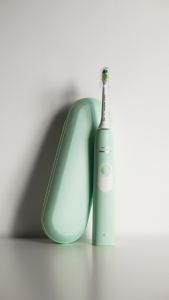
Use an Electric Toothbrush. Using an electric toothbrush can make brushing easier and more effective, especially when you’re dealing with a medical condition that affects your oral health. The oscillating and rotating motion of an electric toothbrush can help remove more plaque and bacteria from your teeth, giving you a cleaner, healthier smile. If you can afford the luxury of an electric toothbrush, it’s worth investing in one. Look for one that has soft bristles and multiple speed settings, and consider getting one with a timer to help you brush for the recommended two minutes. With proper use and care, an electric toothbrush can last for years, making it a smart investment in your oral health. Just don’t neglect to floss just because you have a fancy new tool!
What is the best thing that you have done for your oral health? Do you see the dentist at least once a year like the American Dental Association recommends? Comment below!
Trying to be “perfect” with a chronic illness is impossible. However, being open to learning about yourself, and adapting to your ever-changing situation, can help you thrive in ways that may seem unattainable. Here are three basic things that greatly help manage living with chronic illness.
Turn Bad Days Into Good Data
There are no avoiding bad days when you have a chronic illness. There is no doubt that a bad day can cause feelings of anger, frustration, and grief when losing another day to your condition.
One way we can turn them into a positive is by learning everything we can about those days. Analyze your day or week leading up to that bad day. Was it food, lack of sleep, and/or activity that triggered this bad day? If you are not sure, keeping track will help you see patterns you never noticed before.
Sometimes with chronic illness bad days happen for no particular reason. But perhaps you can find something that you have the ability to manage. Changing that one thing can perhaps decrease the frequency and severity of the bad day.
A health journal can be an ally in tracking your ups and downs. You can create a diary on paper, or look for apps that fit your needs. Along with tracking the “what went wrongs” do not forget to note the “what went rights.” Remembering to mark those positives can help maintain perspective.
Treat Your Emotional Health, Not Just Your Physical Health
With chronic illness you more than likely have been prescribed medication (or several) to treat your physical health. You have maybe changed your routine, or added an activity in your life to help cope with your chronic illness. But have you added anything to help improve your mental health?
Sometimes people feel like we must hide our illness, or just “tough it out” but that can be extremely detrimental to your mental health. Along those same lines, mental health can be extremely detrimental to your physical health.
Take the time to acknowledge your emotions, so that you can deal with them in a healthy way. If you are unsure how to start, reach out to a professional to help guide you in your mental health journey.
Be Forgiving
Would you treat a friend badly because they had to cancel plans because of their chronic illness? I assume not. So why would you be down on yourself when you have to? Treat yourself how you would treat a good friend in the same situation.
Replace judgemental thoughts with love and forgiveness. When you catch yourself saying or thinking a negative thought, stop, and reframe the thought. For example, I find myself thinking “I’m so pathetic” quite often.
When I catch myself in those moments I stop, take a breath, and change that thought. “I may not have been able to open the jar, but I tried, and asked for help when I needed it. And for that, I am proud of myself.” This may seem difficult at first, but the more you practice, the easier it becomes. Eventually, you may even find yourself skipping the negative thought in the first place!
The original idea for this post was to create a short list of Halloween movies that were safe for a person with photosensitive epilepsy. Photosensitive epilepsy is when sudden light/contrast changes trigger a seizure.
What this post quickly turned into was a list of movies that were not safe for photosensitivity. Learn more about photosensitivity and seizures from the Epilepsy Foundation.
The spooky season comes with dangers when you live with epilepsy or migraines triggered by flashing lights. Strobe lights seem to be a staple in haunted houses. Lightening flashes are a common scary ambiance in Halloween movies.
I watched each of these movies (I did so safely) to find these flashes. There were many of the classic movies that you wouldn’t expect that were disqualified from being photosensitive friendly.
Although the movies below do contain some amount of flashing, watching the movie in a bright space lessens the likelihood of triggering a seizure or migraine. This is because the contrast difference is lessened. The 🌞 indicates that the movie is most likely safe for daylight viewing.
Disclaimer: Not all photosensitivity is the same. You can use the below list as a reference if you are unsure of the photosensitivity safety. Please use caution when watching ANY movie if you are triggered by light changes.
Family Friendly Halloween Movies:
Nightmare Before Christmas
Hocus Pocus 🌞
Adams Family (1991)
Edward Scissor-Hands 🌞
Beetlejuice
Halloween Classics:
Halloween
Poltergeist
Ghostbusters
Evil Dead 2: Dead by Dawn
Modern Halloween Movies:
Underworld
Silent Hill
Tucker and Dale vs Evil 🌞
My goal is to watch almost every horror, thriller, slasher, and monster movie, in western culture, to grow this list.
There are movies that you can enjoy in the dark that do not have flashes. But that will be a (much smaller) list for another time.
What is your favorite Halloween movie? Is there a movie listed above, that surprises you that it is not photosensitive safe?
My chronic illness causes constant fatigue. My body is battling itself from the inside, and it’s hard to deal with anything on the outside. Housework falls by the wayside; it is just too hard to make things happen. Everyday I got to see things getting piled up larger and larger, waiting for the time that I felt good enough to do something about it. And that time rarely comes.
One day I took a good long look at my house, and my life, and finally decided I needed to do something drastic to help me. What I ended up looking in to, was minimalism. At first I thought, “how ridiculous? I love the majority of my items in my home, I will never be able to part with them. I should just give up now.”
As I read, I found minimalism didn’t mean living with nothing, it meant living with less.
Research shows brain fatigue increases when it has to process more in an environment. Brain fatigue means body fatigue. Studies have found that clutter in a space raises cortisol levels. Cortisol is your stress hormone. Therefore clutter hits you with a double whammy, to your physical and mental health.
The more I thought about it, the more it started to look good for my epileptic brain. With things being simplified and reduced in my house, my brain would not need to use as much energy (because it really does not have any to spare).
So, this is where we started.
Chalk board reminder if our Keep It Conditions.
Set some guidelines to help you out with the decision making process of what to keep, donate, or trash. Actually write these down, so that you have something visual to reference. Our guidelines are:
Have I used this in the last year? Will I use it in the upcoming year?
Can it be replaced for less than or equal to $20? Can it be borrowed?
Would I purchase this item again?
Is this living out the purpose for which it was created? Or have I found a better use for this and it is currently doing its job?
Am I keeping it out of guilt?
if I had the opportunity, would I sell it in a yard sale?
My largest collection that sparks joy is my wardrobe. I love my clothing. I do not buy an item of clothing that will not create at least three complete outfits with the clothing items that I currently have. I am truly a curator. 💁🏽♀️
However, I do hold onto my items of clothing for decades. I’m not kidding, I have T-shirts that I wore in the 5th grade. (And yes they do still fit; I went through a very early growth spurt, and then never grew again.)
So some items of clothing are clearly made for a younger person, and I am holding on to them purely for selfish nostalgia. That is where those questions come in. “Could someone else use or love it more?”
Two bags of clothes ready for donation next to Al the avocado plant.
Most definitely, yes.
I feel better knowing that I’ve donated them and somebody else will wear and love them the way they should be loved.
The majority of my newer wardrobe has been left untouched, but a lot of other items have been donated, easing the stress of both me and the bar that holds my clothes!
Onion method is not called The Onion method because it’s stinky and makes you cry, it is because you focus on your house layer by layer. Start with the large items, or the items that you can easily identify that do not belong in that space.
Here are some items I found in my living room.
Left to right: Hair tie, Jack-o’-lantern necklace, mailbox key, kangaroo pencil, camera lense cover.
It is September, so that Halloween necklace has been out for almost a year. How embarrassing! 🤦🏽♀️ But it has a home in the Halloween decoration box in storage. The extra camera cover belongs in the camera bag, the pencil belongs in the office, the hair tie belongs in the bathroom, and the mailbox key belongs in the key bowl. And done! That’s five things already cleaned out of my living space! Small victory, but it feels pretty good.
Starting in the space where the smallest amount of work, makes the most visually impactful change, can be a great kickstarter. We donated a lot of clothes, but we don’t get to admire the closet like the clear space in the living room.
It is the room we hang out in the most as a family. Moving those 5 items made a clear open space that I can admire while the family spends time together. And this can be now more quality time because none of us are distracted by the mess that we are surrounded by.
The 15 minute rule. Limit yourself to 15 minutes at a time. Set a timer, and work consistently for that 15 minutes. If that is all you can manage for that day, it is absolutely fine, you did an amazing job.
Metallic Sandtimer – Not 15 mins.
In the beginning, that’s all I could manage. My body would get fatigued, or I just felt that I could not bring myself to do any more work. But I quickly found myself able to extend that 15 minutes. And not only physically I was able to, but I actually wanted to!
I’m not too sure if simplifying will help me as drastically as others. Regardless, I am sure that the benefits, no matter how small, would be worthwhile.
This is where we will start. I’ll give updates about this journey. I hope you are as excited as we, to find where this experiment brings us!
What is the level of clutter in your house? Do you have any tips on how to simplify that you find helpful? Let us know if you try any of the methods above, and how well it worked for you!
Managing social expectations can be difficult when you have a chronic illness. Social expectations of what your illness “should” be like, can be greatly influenced by things seen on TV and movies. Unfortunately, many illnesses and disabilities get portrayed in just one way. And that depiction can sometimes be the only experience of an illness or disability someone has in their life.
You may have seen commercials for new medications that have actors portraying your chronic illness. Sometimes it is hard to see a person in the commercial doing all these things that you cannot. People in those commercials always seem to have a positive attitude about their condition.
You might see things on social media of people accomplishing milestones that you’re worried you may never get to. It is okay to feel frustrated. It is okay to feel hurt by other people’s experiences. No two people, and no two journeys are alike.
What can we do to help when we are feeling like that?
Recognize how strong you are. Say to yourself “this is really hard, but I am working on it.” You are here in this moment, and you know what that means? You have been brave enough to not give up or give in to your disability or chronic illness.
Allow yourself to feel frustration, disappointment, anger, etc. Don’t let somebody tell you that your emotions are bad or invalid. You are going to feel, however you are going to feel. Practice not pushing the emotion away, or pushing the emotion down. But also practice not clinging to that emotion or holding grudges. I say practice, because this will take time to get better at accomplishing.
Focus on what you know to be true in this moment. Try to avoid thinking only in extremes. For example “I never will” or “it is wrong that” or “it is not fair that” are parts of extreme thinking. Remind yourself of the good you have right now. Read more about stating your one good thing here.
Finish by thinking of pleasant things that you can do today that makes you feel good. And acknowledge how amazing and wonderful it is that you can do that. There are many activities that can bring joy that don’t require much effort, but can bring much joy. Can’t think of anything off hand? The following list contains Covid-19 restriction friendly suggestions.
Singing (regardless of talent level)
Talking with a friend (on the phone or in person)
Day dreaming (stick to good thoughts)
Gaming (board or video)
Playing with pets (this is good for them too)
Reading (books or blogs – like this one!)
Napping (one of my favorites)
Learning something new (language, hobby, musical instrument)
Here is my example of using the above technique: I see people who are days, months, and years seizure-free via social media. Right now in my life I’m lucky to go a couple of hours seizure-free. Therefore, I can feel quite discouraged and jealous at times.
But, the fact that I can help bring awareness about the different experiences people have with epilepsy, and other chronic illnesses makes me feel proud. Helping more of the general public be aware that not all epilepsy looks the same, is very rewarding.
My hope is, with more education, social expectations will be more realistic. My truth in this moment is: I know I have the capability of reaching towards that goal, with this blog. It is hard, but I am working on it.
Having a chronic illness comes with a lot of unpredictability. You may not know what the future may hold. But together we can work on bringing more joy and comfort in the now.
What are some frustrations you experience with your, or a loved ones chronic illness? Do you think you will try what was discussed above in those moments? Feel free to share in the comments.
My partner “happened to be” looking at adoptable dogs on the Animal Humane website. He turned the phone to show me a picture of a catahoula puppy. He looked pathetic: skinny, scared, in need of support. Dallas was his shelter name. Something drew me to him immediately. I saw him the next day.
Actual picture published on the Animal Humane website.
Animal Humane has a survey about what you as an adopter, are looking for in a dog. My answer: one who could go on outdoor adventures, travel with me, be my best friend always. When the employee asked if I was there to see someone in particular, I said Dallas. She laughed and said “you are not going to get all that from him!” My husband and I were confused as to why she would say that.
They put us in a greeting room, and we waited as they went to go get him. One he came in I realized what she had meant. He was being carried, unwilling to walk.
Being abandoned during critical development puppy years clearly caused some damage. At only 6 months old, he was frightened by the world that had been so cruel.
He laid on the floor in a little ball, untrusting, understandably. Attempting to not stress him more, we waited for Dallas to feel safe before I tried to pet him. Therefore, my husband and I sat on the floor next to him, and calmly had a conversation.
It took 25 minutes for just one leg to relax. Even then, treats we offered him were highly suspicious and gentle touches caused flinches.
We eventually moved to an outside space, and by that I mean he was carried, while I walked. Outside he was more comfortable; he was on all fours and he interacted much more. Our presence was becoming more tolerable to him. Surprisingly, he actually wanted loves, then he would go sniff, and come back for more loves.
At one point a bird flew towards us causing a very visual and emotional reaction from me. (I have an irrational fear of birds). Dallas immediately ran over to me to see if I was okay. I knew I was bringing him home.
My parents and their dog are a big part of my life, so a meeting with them was crucial. Like always, their dog enjoyed having a friend. However, afterwards, my parents told me I was crazy to take on a dog that would require so much work. I didn’t care, I already loved him.
He did require work. At home, everything was new and scary. Open doorways were impassable, floor changes were debilitating, learning how to be a dog was overwhelming.
I hired a trainer for assistance, which was life changing for the both of us. He helped us in experiencing the world in a safe and confident manner. One session he mentioned how wonderful Dallas would be as a therapy dog because of his empathy.
Taking that opportunity, I asked how well he would be as a service dog, revealing that I have epilepsy. That was not something I did comfortably at that point in my life. Epilepsy was not something I had accepted yet. My trainer assured me that medical alerting would be a job in which he would excel.
In only one year of training, Dallas was confident and proud! He was alerting me before episodes, and keeping me safe during seizures. Adopting him that day at Animal Humane I knew I was saving him, but I could never have expected that he would be saving me. We go on outdoor adventures, he travels with me, and he will be my best friend, always.
Dallas at the Walk to End Epilepsy 2019 with Sāb.
If you would like to donate to the Animal Humane visit their Donation page. Or volunteer at your local shelter.
It is scary living with a chronic, uncontrolled illness on a normal day. With the emergence of COVID-19 (coronavirus), it is easy to feel incapacitated.
The need to put your health care first, especially when you have loved ones that need care also, can be difficult. This conundrum has put me in a tough situation.
The smart doctors and scientists of the world are recommending physical (previously called social) distancing, and to self-isolate if you have symptoms. I don’t have symptoms – yet. And I am not kidding myself by thinking I will not get sick from this.
They are estimating 50% of people will get COVID-19. If I look at my household, between my husband and I… I will be the one to get sick.
However, I think the best thing I could do right now is to stay at home, isolate myself for at least the next two weeks, and wait to see how the world is then, to make a plan moving forward. Seems really safe, right?
Not actually.
My husband still is going to work, as he works an essential job and is at low risk of infection. Because he is my main caretaker, he is the one having to go get my medications, and the household supplies. That puts him out there.
That means he is at a higher risk of contracting the virus, period. Then he comes home to me. We have a “decontamination room” at the back of the house where he strips down and sanitizes. That can only do so much.
Regardless, he has still been exposed and therefore is exposing me to the virus just by being in the house. Not to mention our wanting to snog transfers all viruses and cooties.
So where do we draw the line? Where do we find the comfort of “I’m doing everything I can” and keep the practicality of “I still have to live my life.”
Maybe just holding on to the hope that the majority of the world is also practicing social distancing and washing their hands frequently and effectively, is all that we have right now.
Please, consider sending a text, a tweet, a DM, or video call to the people in your life that you know are supporting people in the high risk group. Thank them for helping reduce the curve. And a big thanks to you, if you are that person.
It is fortunate that I have a job that I can do – fairly well – from home. But it puts a burden on my fellow staff to pick up the slack on all the physical work that I’m no longer there to do.
I am ashamed telling my boss that I have to stay home; because I’m too scared of dying of SUDEP because the strain that getting sick puts on my uncontrolled brain. I need to thank them more, for holding the front lines, and being so understanding.
I want to thank my friends, my in-laws, and my parents, for not taking it personally when I tell them I can’t physically be with them for the unforeseeable future. I appreciate and love all of them.
I hope you feel that kind of support from the people in your life.
Who do you appreciate the most right now? What do you find most difficult in these troubling times? Share with us in the comments.
















 Epil(epsy)ogue