We all have said, and done things that we regret. We know we messed up. So how do we start the apology process? Sometimes it seems impossible.
If we break down the process into steps, and gather our emotions, it’s not.
Here are five ways to communicate that you are sorry, and have the other person feel your sincerity.
Express your regret or remorse. Something happened, and it didn’t turn out well. How do you feel about what happened? Were your actions something regretful? Do you feel utterly empty without the other party’s presence in your life? Be honest and open about how you feel about the result of what happened.
Explain what you think went wrong (without pointed phrases). Pointed phrases are statements that shift responsibility to the other party. They invalidate the other person’s feelings. An example of a pointed phrase is “I’m sorry that you were offended” or “I’m sorry, but you…” They have every right to feel what they feel, as do you. As much as you wouldn’t want them to dismiss your feelings, don’t dismiss theirs.
Request forgiveness and allow as much time as the other needs to process their emotions. Putting a time limit, or expressing an expected date of when the other person should forgive you, will most likely cause the other person to not want to even begin the forgiveness process.
Before composing: Give yourself time to be in a space where you feel ready and able to apologize. Being sincere is more important than rushing an apology. Emotions of remorse best translate in a face to face interaction. in times of COVID-19, that may not be an option, but consider a video visit. Likewise, just your voice can convey sincerity over the phone.
If you want to say sorry but feel like an in person or over the phone apology would cause more issues (ie. Interruptions, raised voices), a hand written one is better than none. No deed is too small if the relationship is worth restoring.
You are ready forgive/apologize, and move forward. How do you know the other party is ready? You won’t necessarily know. But don’t let assuming that the other party is not ready to forgive, hold you back from reaching out with an apology.
Do you feel like you need to apologize to someone? Are you going to use the tips above? Let us know, in the comments, how your apology was accepted (or denied).
My chronic illness causes constant fatigue. My body is battling itself from the inside, and it’s hard to deal with anything on the outside. Housework falls by the wayside; it is just too hard to make things happen. Everyday I got to see things getting piled up larger and larger, waiting for the time that I felt good enough to do something about it. And that time rarely comes.
One day I took a good long look at my house, and my life, and finally decided I needed to do something drastic to help me. What I ended up looking in to, was minimalism. At first I thought, “how ridiculous? I love the majority of my items in my home, I will never be able to part with them. I should just give up now.”
As I read, I found minimalism didn’t mean living with nothing, it meant living with less.
Research shows brain fatigue increases when it has to process more in an environment. Brain fatigue means body fatigue. Studies have found that clutter in a space raises cortisol levels. Cortisol is your stress hormone. Therefore clutter hits you with a double whammy, to your physical and mental health.
The more I thought about it, the more it started to look good for my epileptic brain. With things being simplified and reduced in my house, my brain would not need to use as much energy (because it really does not have any to spare).
So, this is where we started.
Chalk board reminder if our Keep It Conditions.
Set some guidelines to help you out with the decision making process of what to keep, donate, or trash. Actually write these down, so that you have something visual to reference. Our guidelines are:
Have I used this in the last year? Will I use it in the upcoming year?
Can it be replaced for less than or equal to $20? Can it be borrowed?
Would I purchase this item again?
Is this living out the purpose for which it was created? Or have I found a better use for this and it is currently doing its job?
Am I keeping it out of guilt?
if I had the opportunity, would I sell it in a yard sale?
My largest collection that sparks joy is my wardrobe. I love my clothing. I do not buy an item of clothing that will not create at least three complete outfits with the clothing items that I currently have. I am truly a curator. 💁🏽♀️
However, I do hold onto my items of clothing for decades. I’m not kidding, I have T-shirts that I wore in the 5th grade. (And yes they do still fit; I went through a very early growth spurt, and then never grew again.)
So some items of clothing are clearly made for a younger person, and I am holding on to them purely for selfish nostalgia. That is where those questions come in. “Could someone else use or love it more?”
Two bags of clothes ready for donation next to Al the avocado plant.
Most definitely, yes.
I feel better knowing that I’ve donated them and somebody else will wear and love them the way they should be loved.
The majority of my newer wardrobe has been left untouched, but a lot of other items have been donated, easing the stress of both me and the bar that holds my clothes!
Onion method is not called The Onion method because it’s stinky and makes you cry, it is because you focus on your house layer by layer. Start with the large items, or the items that you can easily identify that do not belong in that space.
Here are some items I found in my living room.
Left to right: Hair tie, Jack-o’-lantern necklace, mailbox key, kangaroo pencil, camera lense cover.
It is September, so that Halloween necklace has been out for almost a year. How embarrassing! 🤦🏽♀️ But it has a home in the Halloween decoration box in storage. The extra camera cover belongs in the camera bag, the pencil belongs in the office, the hair tie belongs in the bathroom, and the mailbox key belongs in the key bowl. And done! That’s five things already cleaned out of my living space! Small victory, but it feels pretty good.
Starting in the space where the smallest amount of work, makes the most visually impactful change, can be a great kickstarter. We donated a lot of clothes, but we don’t get to admire the closet like the clear space in the living room.
It is the room we hang out in the most as a family. Moving those 5 items made a clear open space that I can admire while the family spends time together. And this can be now more quality time because none of us are distracted by the mess that we are surrounded by.
The 15 minute rule. Limit yourself to 15 minutes at a time. Set a timer, and work consistently for that 15 minutes. If that is all you can manage for that day, it is absolutely fine, you did an amazing job.
Metallic Sandtimer – Not 15 mins.
In the beginning, that’s all I could manage. My body would get fatigued, or I just felt that I could not bring myself to do any more work. But I quickly found myself able to extend that 15 minutes. And not only physically I was able to, but I actually wanted to!
I’m not too sure if simplifying will help me as drastically as others. Regardless, I am sure that the benefits, no matter how small, would be worthwhile.
This is where we will start. I’ll give updates about this journey. I hope you are as excited as we, to find where this experiment brings us!
What is the level of clutter in your house? Do you have any tips on how to simplify that you find helpful? Let us know if you try any of the methods above, and how well it worked for you!
Warning- primitive road. Three adventures, Continue on.
Path unknown, Rocks threaten. Meadow offers rest.
Yellow flowers, Shine as bright as the sun. The pines enjoy both.
Humming bees, Racing by. Unaware it’s vacation.
Domesticated animal, Turns wild. Free as the wind in the trees.
Turkey vultures, Soar. We are not what you are looking for.
Morning cool, Turns afternoon warm. Hikers: thankful for shade.
Large ears turn to listen, She hears no threat. Her hoves saunter on.
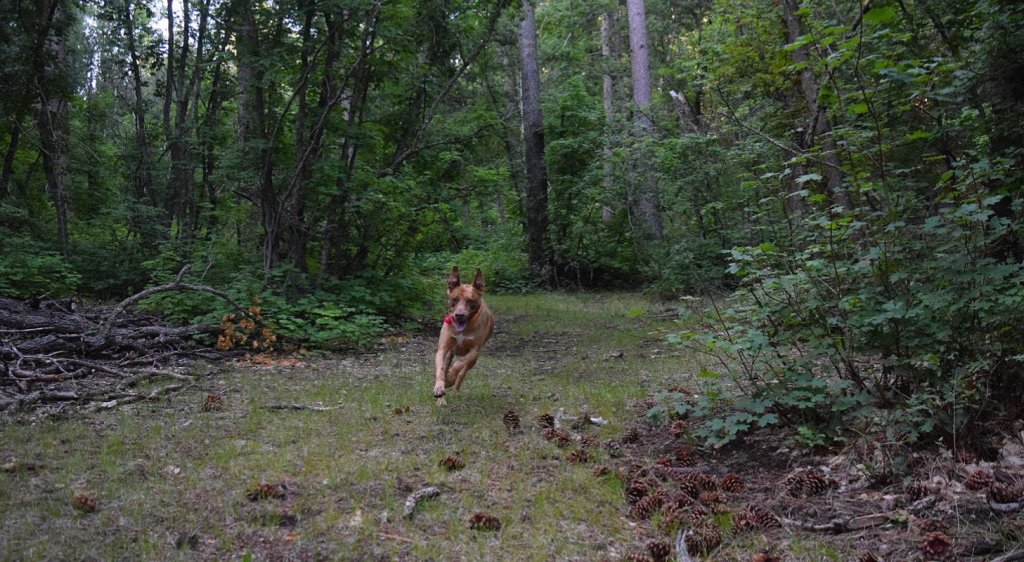
Catahoula watches grazers, Very respectful. Good boy.
Four cows, Sixteen stomachs. Understandably you eat all day.
Drifting in the wind, On paper wings. Flutters by.
The butterfly lands, And waves. I wave back.
Sun setting, Storm threatens. It’s thunder shakes the mountain.
Trees sing lullabies. The gently falling rain, Keeps tempo.
The fire dances. It’s movement, Warms three hearts.
Morning fog. Sunbeams kiss wet leaves, Shimmering.
Traveling along – primitive road. Three adventurers, Returning home.
Path now known, Rocks permitting. Meadow wishes best
The American Haiku is a simple three line poem without restrictions of syllables or rhyming. Jack Kerouac revised the Japanese art form in the late 1950’s through the late 1960’s to adapt to Western Culture. To learn more about Jack Kerouac and his Beat Generation, visit http://jackkerouac.com/ website of UMass, Lowell, The Jack and Stella Kerouac Center for the Public Humanities.
“Just focus on the good”. – Advice I’m sure you have heard before.
Kind of a hard thing to do right now in the world. All the scary and bad thoughts that can easily occupy your mind. Everything and everyone is focused on the Coronavirus how terribly it is affecting the world. So if everyone and everything is having you focus on the bad, how are you supposed to get your mind at ease, and off of this pandemic?
The simple answer: change of mindset.
The better answer: small steps can help in changing your mindset.
This will not happen overnight. This is something that takes practice, and dedication. Dedication to see the good. This does not take more than a few moments, and you don’t need any special equipment.
Right now change of mindset might seem like an overwhelming task. But all you need, is one. One good thing.
How do you find your good thing of the day?
First assess who you are, where you are, and what you have in this moment.
Is there someone in your life that is always your support? Have you accomplished something that maybe was a bummer doing, but you are proud that it’s done? Did someone say or do something that made you smile?
Even if you’re something good is simple as: I had good snuggle time with my dog today. That’s where I need you to start – smallest things. Overtime reflecting on your day it will get easier, and you will find more, or bigger good things. I promise.
Enlist the help of your family and friends to start getting in the habit reviewing your one good thing of the day.I practice at the end of every day with my husband. But as long as we have been practicing, even we found we forgot to think of our one good thing, once this virus stopped the world.
But being dedicated to our mental health, we picked it back up. Don’t let a slight lapse in practice discourage you. Just start again and let you one good thing of the day be that you are back focused on remembering your one good thing!
You’ve got this, friend. So go out there, and be prepared to start counting your good things!
Anything you can think of right now as your one good thing? Share it below in the comments.











 Epil(epsy)ogue