I Stretched Every Day for 31 Days, This is What Happened…

I am the epitome of idleness; not because I am lazy but because of my chronic illness. My uncontrolled epilepsy causes multiple seizures throughout the day and status epilepticus at night, leading to constant exhaustion. Even a simple task can consume all my energy, let alone anything physical. Just existing uses up more energy than the average person.

So I challenged myself to stretch every day for 31 days, to see if it could make a difference. Now, 31 days does not create a habit. It takes anywhere from 18 to 254 days, as science suggests. Nonetheless, I wanted to try to condition my body to a point that stretching wouldn’t seem like extra effort.

What does stretching do to your body?

The muscles are a fascinating fiber in our body. When we stretch, the fibers have the ability to maintain elongation, unlike a rubber band that just snaps back to its original shape. However, to maintain that elongation, regular movement within that range is necessary.
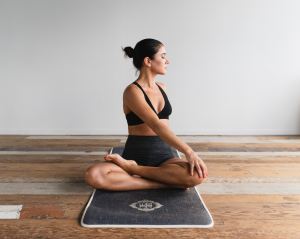
Woman sitting on hardwood floor, legs crossed, with her body gently rotated as she stretches her back. One hand is resting on her left knee, and her eyes are closed, looking relaxed. Yoga mat beneath her, with a light grey wall in the background.
Photo by Dane Wetton

As we age, the elastic fibers in our body regenerate less effectively, causing a reduction in movement range and muscle stiffness. Thus, movement and stretching become increasingly important as we grow older. For more information on the significance of movement, check out my other article Movement Matters.

Week 1

Initially I was unsure of how to begin. With no established routine, I was randomly stretching exercises. Then, I discovered a free app called Female Fitness – Women Workout. It offers targeted stretching routines such as full body, morning warm up, sleepy time stretch, and even splits training. It was the perfect place to start for the person who lacked direction. I also found a YouTuber who specialized in stretching techniques which allowed me to gain more knowledge along my journey. Below, is one of his videos of a easy 10 minute stretch, for any skill level, if you are interested in checking out his content.

Week 2

During this week, something surprising happened – I began to look forward to stretching. I found myself taking breaks to stretch my body, and even found ways to incorporate stretching while working. At this point I had established an actual stretch routine. Here were my rules:

  1. Engage my entire body in stretching – this did not apply to the stretches I did while I was still actively working at my computer or doing another activity. This meant I was dedicating time to actually do a full body stretch.  
  2. No time restrictions. – I wanted to stretch until I felt good, not until the clock/timer said I was done.  
  3. I stretched to discomfort, not pain. Once the discomfort disappeared, I would push a little further.

Week 3

By week three, a shift occurred in my mindset. I no longer needed the distraction of YouTube to complete a stretching session. It was the first time my body had moved since my brain surgery, and I never rebuilt an emotional connection to physical movement. But when I focused on how I felt, physically and emotionally as I flowed from one position to the next, I realized it was a peaceful experience.

Fit woman lying on a yoga mat, performing a supine spinal twist with a serene smile on her face. A soft beam of light from an out-of-frame window illuminates the wall and gently crosses her body, adding a dynamic touch to the tranquil scene
Photo by Miriam Alonso

Week 4

After consistent stretching, I began to see physical results.  I even noticed a significant difference in my overall flexibility. Am I ready to join Cirque Du Soleil? I think not. But incorporating movement into my day made a difference. Even the smallest amount of movement of our body can increase blood and fluid supply to our bodies. The small results I achieved during these 31 days have motivated me to continue stretching beyond this challenge.

What kinds of benefits do you find from stretching? I would love to hear about your stretching routine, leave it in the comments below!
Oral health and Epilepsy

Taking care of your teeth is important for everyone, but it can be particularly challenging if you live with a condition that causes involuntary clenching or grinding of your teeth. Did you know that dentin, the substance that makes up the bulk of your teeth, is the hardest substance in your body (with bone coming in second)? When you have a medical condition like seizures, it’s essential to take extra care of your oral health to avoid injuries and long-term damage. In this post, we’ll explore some practical tips to help you care for your oral health.

Photo by Pixabay

Find a good dentist. Having a good dentist as a part of your healthcare team is crucial when dealing with a chronic illness that affects your oral health. Be sure to inform your dentist of all your medical conditions. Seizures themselves can cause oral injuries. Some anticonvulsant medications have oral health side effects. Working closely with your dentist, you can help make a plan for oral health that fits your unique situation.

Get a mouth guard. Using a mouth guard can be a game-changer if you experience clenching or grinding of your teeth due to seizures. Your dentist can customize a mouth guard specifically to your mouth and needs, or you can buy one over-the-counter and custom-fit it yourself. Your dental insurance may even cover the cost of your guard, or at least reduce it. If you choose to buy one over-the-counter, just know that getting the perfect fit takes a lot of patience so be sure to read instructions that come with the kit.

A mouth guard can help prevent irreversible enamel damage caused by seizures, as well as prevent any further wear and tear on your molars. Talk to your medical professional to see if a mouth guard would be beneficial for you, and don’t hesitate to ask your dentist for advice on choosing the right type of mouth guard for your needs.

Use an Electric Toothbrush. Using an electric toothbrush can make brushing easier and more effective, especially when you’re dealing with a medical condition that affects your oral health. The oscillating and rotating motion of an electric toothbrush can help remove more plaque and bacteria from your teeth, giving you a cleaner, healthier smile. If you can afford the luxury of an electric toothbrush, it’s worth investing in one. Look for one that has soft bristles and multiple speed settings, and consider getting one with a timer to help you brush for the recommended two minutes. With proper use and care, an electric toothbrush can last for years, making it a smart investment in your oral health. Just don’t neglect to floss just because you have a fancy new tool!

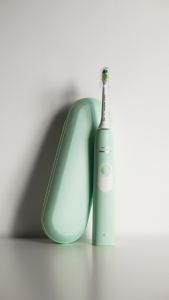
Mint Green Electric Toothbrush
Photo by Cristi Ursea on Unsplash

What is the best thing that you have done for your oral health? Do you see the dentist at least once a year like the American Dental Association recommends? Comment below!

3 Must Do’s When Living With a Chronic Illness

Trying to be “perfect” with a chronic illness is impossible. However, being open to learning about yourself, and adapting to your ever-changing situation, can help you thrive in ways that may seem unattainable. Here are three basic things that greatly help manage living with chronic illness.

Turn Bad Days Into Good Data

There are no avoiding bad days when you have a chronic illness. There is no doubt that a bad day can cause feelings of anger, frustration, and grief when losing another day to your condition.

One way we can turn them into a positive is by learning everything we can about those days. Analyze your day or week leading up to that bad day. Was it food, lack of sleep, and/or activity that triggered this bad day? If you are not sure, keeping track will help you see patterns you never noticed before.

Photo by Isaac Smith

Sometimes with chronic illness bad days happen for no particular reason. But perhaps you can find something that you have the ability to manage. Changing that one thing can perhaps decrease the frequency and severity of the bad day.

A health journal can be an ally in tracking your ups and downs. You can create a diary on paper, or look for apps that fit your needs. Along with tracking the “what went wrongs” do not forget to note the “what went rights.” Remembering to mark those positives can help maintain perspective.

Treat Your Emotional Health, Not Just Your Physical Health

With chronic illness you more than likely have been prescribed medication (or several) to treat your physical health. You have maybe changed your routine, or added an activity in your life to help cope with your chronic illness. But have you added anything to help improve your mental health?

Photo by Mike Erskine

Sometimes people feel like we must hide our illness, or just “tough it out” but that can be extremely detrimental to your mental health. Along those same lines, mental health can be extremely detrimental to your physical health.

Take the time to acknowledge your emotions, so that you can deal with them in a healthy way. If you are unsure how to start, reach out to a professional to help guide you in your mental health journey.

Be Forgiving

Would you treat a friend badly because they had to cancel plans because of their chronic illness? I assume not. So why would you be down on yourself when you have to? Treat yourself how you would treat a good friend in the same situation.

Replace judgemental thoughts with love and forgiveness. When you catch yourself saying or thinking a negative thought, stop, and reframe the thought. For example, I find myself thinking “I’m so pathetic” quite often.

When I catch myself in those moments I stop, take a breath, and change that thought. “I may not have been able to open the jar, but I tried, and asked for help when I needed it. And for that, I am proud of myself.”
This may seem difficult at first, but the more you practice, the easier it becomes. Eventually, you may even find yourself skipping the negative thought in the first place!

What are your “must do’s” in living with a chronic condition? Do you practice any of the above? Let me know in the comments below!

Bad day? Four tips to have a brighter day.

It was early, the sun was shining ☀️, the birds were singing 🐦. But I must have gotten out of bed on the wrong side. Every little thing was irking me. My partner was complaining about his back, again. He was trying to help me with something on my phone and all I could focus on was his coffee breath. ☕ Dallas went out to pee, and he was sniffing the bush for what I thought was for-ev-er.
My partner even told me he donated $100 to a local 8-year-old rock climber, who was crushed by a boulder and lost her leg. All I got was annoyed that he didn’t use his $100 elsewhere. (Like for food for people during this Covid time? Not sure I actually had an idea in mind. Again, I was just being a grouch.)
That’s what I knew I needed an attitude adjustment. How can any human be annoyed from somebody helping an eight year old girl in need? Had I suddenly turned evil overnight? Most likely not, I just desperately needed a change in mindset. 🧠


So how do we help ourselves when we feel that the world cannot do anything right?

Be aware of your words and your actions. The good news is that you realize you are grumpy. And grumpy might be an understatement… However you have the advantage here because you can recognize this. Keep that awareness; be very careful how you treat and talk to the people around you. Try to keep in mind that they are not meaning to annoy or hurt. Unless you have been very mean to them already, I’m sure they don’t even know that you’re feeling this way. You can inform them that you need a little bit of space in order to get yourself back to a not easily activated state. Be honest, tell them that there is nothing that they can do. It is best to just let you have your space at this time.

Change your atmosphere. Okay so you can’t quite just get back into bed, close your eyes, open them and literally get out on the other side of the bed, and all will be fixed. But you can change the environment that you’re in right now. If you can be outside, and breathe some fresh air, do so. Let some sun beams melt that ice on your heart. 😎 But please wear sunscreen!

Do one activity that you know always makes you happy. You know that one scene in the movie that always makes you laugh out loud? Watch that scene. Do you have a video game that you can immerse yourself in and remove yourself from reality for a moment? Play it. Are you a workout junky that gets that endorphin kick when you do 2000 jumping jacks? Jump away! Read more about how movement matters to improve mood.

Fake it ’till you make it. A wiser fella than myself once said: start with the actions, and the feelings will follow. Start with a small grin. Voice appreciation for the small things. Soon you may find yourself truly smiling and aware of the better, brighter day you are having. 🌞

How do you usually turn your frown upside down? If you use any of these tips, let us know in the comments!

Create the Perfect Apology With These Five Tips

‘Tis the season of forgiveness.

We all have said, and done things that we regret. We know we messed up. So how do we start the apology process? Sometimes it seems impossible.

If we break down the process into steps, and gather our emotions, it’s not.

Here are five ways to communicate that you are sorry, and have the other person feel your sincerity. 

Express your regret or remorse. Something happened, and it didn’t turn out well. How do you feel about what happened? Were your actions something regretful? Do you feel utterly empty without the other party’s presence in your life? Be honest and open about how you feel about the result of what happened.

Explain what you think went wrong (without pointed phrases). Pointed phrases are statements that shift responsibility to the other party. They invalidate the other person’s feelings. An example of a pointed phrase is “I’m sorry that you were offended” or “I’m sorry, but you…” They have every right to feel what they feel, as do you. As much as you wouldn’t want them to dismiss your feelings, don’t dismiss theirs. 

Request forgiveness and allow as much time as the other needs to process their emotions. Putting a time limit, or expressing an expected date of when the other person should forgive you, will most likely cause the other person to not want to even begin the forgiveness process. 

Before composing: Give yourself time to be in a space where you feel ready and able to apologize. Being sincere is more important than rushing an apology. Emotions of remorse best translate in a face to face interaction. in times of COVID-19, that may not be an option, but consider a video visit. Likewise, just your voice can convey sincerity over the phone. 

If you want to say sorry but feel like an in person or over the phone apology would cause more issues (ie. Interruptions, raised voices), a hand written one is better than none. No deed is too small if the relationship is worth restoring.

You are ready forgive/apologize, and move forward. How do you know the other party is ready? You won’t necessarily know. But don’t let assuming that the other party is not ready to forgive, hold you back from reaching out with an apology.

Do you feel like you need to apologize to someone? Are you going to use the tips above? Let us know, in the comments, how your apology was accepted (or denied).

I’m trying minimalism (to see how it would impact epilepsy) so you don’t have to.

My chronic illness causes constant fatigue. My body is battling itself from the inside, and it’s hard to deal with anything on the outside. Housework falls by the wayside; it is just too hard to make things happen. Everyday I got to see things getting piled up larger and larger, waiting for the time that I felt good enough to do something about it. And that time rarely comes.

One day I took a good long look at my house, and my life, and finally decided I needed to do something drastic to help me. What I ended up looking in to, was minimalism. At first I thought, “how ridiculous? I love the majority of my items in my home, I will never be able to part with them. I should just give up now.”

As I read, I found minimalism didn’t mean living with nothing, it meant living with less.

Research shows brain fatigue increases when it has to process more in an environment. Brain fatigue means body fatigue. Studies have found that clutter in a space raises cortisol levels. Cortisol is your stress hormone. Therefore clutter hits you with a double whammy, to your physical and mental health.

The more I thought about it, the more it started to look good for my epileptic brain. With things being simplified and reduced in my house, my brain would not need to use as much energy (because it really does not have any to spare). 

So, this is where we started.

Chalk board reminder if our Keep It Conditions.

Set some guidelines to help you out with the decision making process of what to keep, donate, or trash. Actually write these down, so that you have something visual to reference. Our guidelines are: 

  • Have I used this in the last year? Will I use it in the upcoming year?
  • Can it be replaced for less than or equal to $20? Can it be borrowed?
  • Would I purchase this item again?
  • Is this living out the purpose for which it was created? Or have I found a better use for this and it is currently doing its job?
  • Am I keeping it out of guilt?
  • if I had the opportunity, would I sell it in a yard sale?
  • Could somebody else use it or love it more?
  • Does it “spark joy”? (Inspired by the KonMari method)

My largest collection that sparks joy is my wardrobe. I love my clothing. I do not buy an item of clothing that will not create at least three complete outfits with the clothing items that I currently have. I am truly a curator. 💁🏽‍♀️

However, I do hold onto my items of clothing for decades. I’m not kidding, I have T-shirts that I wore in the 5th grade. (And yes they do still fit; I went through a very early growth spurt, and then never grew again.) 

So some items of clothing are clearly made for a younger person, and I am holding on to them purely for selfish nostalgia. That is where those questions come in. “Could someone else use or love it more?” 

Two bags of clothes ready for donation next to Al the avocado plant.

Most definitely, yes.

I feel better knowing that I’ve donated them and somebody else will wear and love them the way they should be loved.

The majority of my newer wardrobe has been left untouched, but a lot of other items have been donated, easing the stress of both me and the bar that holds my clothes!

Onion method is not called The Onion method because it’s stinky and makes you cry, it is because you focus on your house layer by layer. Start with the large items, or the items that you can easily identify that do not belong in that space.

Here are some items I found in my living room.

Left to right: Hair tie, Jack-o’-lantern necklace, mailbox key, kangaroo pencil, camera lense cover.

It is September, so that Halloween necklace has been out for almost a year. How embarrassing! 🤦🏽‍♀️ But it has a home in the Halloween decoration box in storage. The extra camera cover belongs in the camera bag, the pencil belongs in the office, the hair tie belongs in the bathroom, and the mailbox key belongs in the key bowl. And done! That’s five things already cleaned out of my living space! Small victory, but it feels pretty good.

Starting in the space where the smallest amount of work, makes the most visually impactful change, can be a great kickstarter. We donated a lot of clothes, but we don’t get to admire the closet like the clear space in the living room.

It is the room we hang out in the most as a family. Moving those 5 items made a clear open space that I can admire while the family spends time together. And this can be now more quality time because none of us are distracted by the mess that we are surrounded by.

The 15 minute rule. Limit yourself to 15 minutes at a time. Set a timer, and work consistently for that 15 minutes. If that is all you can manage for that day, it is absolutely fine, you did an amazing job.

Metallic Sandtimer – Not 15 mins.

In the beginning, that’s all I could manage. My body would get fatigued, or I just felt that I could not bring myself to do any more work. But I quickly found myself able to extend that 15 minutes. And not only physically I was able to, but I actually wanted to!

I’m not too sure if simplifying will help me as drastically as others. Regardless, I am sure that the benefits, no matter how small, would be worthwhile.

This is where we will start. I’ll give updates about this journey. I hope you are as excited as we, to find where this experiment brings us!

What is the level of clutter in your house? Do you have any tips on how to simplify that you find helpful? Let us know if you try any of the methods above, and how well it worked for you! 

How to Focus on the Positive (in a time of Negativity)

“Just focus on the good”. – Advice I’m sure you have heard before.

Kind of a hard thing to do right now in the world. All the scary and bad thoughts that can easily occupy your mind. Everything and everyone is focused on the Coronavirus how terribly it is affecting the world. So if everyone and everything is having you focus on the bad, how are you supposed to get your mind at ease, and off of this pandemic?

The simple answer: change of mindset.

The better answer: small steps can help in changing your mindset.

This will not happen overnight. This is something that takes practice, and dedication. Dedication to see the good. This does not take more than a few moments, and you don’t need any special equipment. 

Right now change of mindset might seem like an overwhelming task. But all you need, is one. One good thing. 

How do you find your good thing of the day?

First assess who you are, where you are, and what you have in this moment. 

Is there someone in your life that is always your support? Have you accomplished something that maybe was a bummer doing, but you are proud that it’s done? Did someone say or do something that made you smile? 

Even if you’re something good is simple as: I had good snuggle time with my dog today. That’s where I need you to start – smallest things. Overtime reflecting on your day it will get easier, and you will find more, or bigger good things. I promise.

Enlist the help of your family and friends to start getting in the habit reviewing your one good thing of the day.I practice at the end of every day with my husband. But as long as we have been practicing, even we found we forgot to think of our one good thing, once this virus stopped the world. 

But being dedicated to our mental health, we picked it back up. Don’t let a slight lapse in practice discourage you. Just start again and let you one good thing of the day be that you are back focused on remembering your one good thing!

You’ve got this, friend. So go out there, and be prepared to start counting your good things!

Anything you can think of right now as your one good thing? Share it below in the comments.

Dog Days of Quarantine

Physical (formerly known as social) distancing is important to keeping yourself safe and healthy. However, it can get lonely, and let’s admit, even downright boring staying at home. We at least have the ability to watch movies, cook, bake, and play games to keep us from going stir crazy. But what about Fido?

We must remember our furry friends during this isolation process. Filling their basic needs of shelter love and food, may not be enough during this time. Meaningful interactions and continuing to maintain social order in the home help keep your dog calm and less anxious through this big change in his life.

Routine

Routine is important for dogs. Now that we find ourselves at home for a large amount of time we need to establish new routines. Did you used to feed your dog every morning right after you showered? Maybe you can incorporate the same ritual but in different steps. 

Now that you are waking up later, you can feed the dog right when you wake up. This gives you time to hang out in your PJs and drink a cup of Joe before you shower. It may take some time for doggo to get used to, but in time he will realize this is the new normal. 

Walk

Although we are practicing social distancing, most of us in the United States are still allowed to leave the house recreationally. This means we can take a S-T-R-O-L-L! We have to spell the word “stroll” because the dog now knows how to spell walk, and knows what it means. Scary, sometimes, how smart they are, right?

If you decide to take that walk, be sure you pass people on the sidewalk with at least 6ft between. Do not go to dog parks, or other highly visited spaces. 

Play

Although we cannot visit public spaces like dog parks, it does not mean that Fido cannot get the excitement of play. They need the mental and physical stimulation in order to regulate their behavior at home.

A longer walk can tire Fido out. If you take a longer walk, be sure to listen to your dog’s body language and not expect too much from him in the beginning, if he is not in shape. Work up slowly to longer walks. 

For a change in pace, try a short activity at a higher energy level. Maybe you have been itching to dust off those old roller-blades, skate boards, or even bikes out for Pups to run beside. Be sure you teach him how to join you safely to avoid getting tangled up. Don’t forget your safety gear! While you both are having fun, be sure to pay attention to his body language to know when to stop, and let him set the pace.

Bath

Hygiene is imperative, more so now than ever, and not just for those of us without paws. A dog’s skin health is a big influence in overall happiness. Perhaps you took Puppers to the groomer every week. Now that you are sheltering in place, a trip to the groomer is not feasible. 

If an outside bath is possible, try to reduce water waste by running the hose in the lawn, or dumping bath buckets in the garden. Before putting the used water in the lawn or garden, check to see if your dog shampoo is safe for plants.

Perhaps an indoor bath is preferred. If bathing in a sink or bathtub, clean the surfaces after use and check drains for hair clogs. At my house, my husband has to pull out the big clogs – I just don’t have the stomach for it!

Treats

Speaking of stomach… It is hard to resist those puppy dog eyes! I know I have fallen victim to them plenty of times. But we must resist. In order to keep Dog at a healthy weight, we can not overdo it with constant treats. 

Encourage good behavior with treats. Use treats to teach a new trick or brush up on service dog assistant tasks.  As long as treat giving remains constructive, it is unlikely that you will overdo or over indulge.

Personal Space 

Personal space is something that is important to us all. Having the family home all day can be stressful on your dog. We need to respect their personal space as we expect them to respect ours. Love and affection is wonderful to give a dog again but make sure to notice their behavior and understand when they need a little bit more space.

A Brave, New World

We all wish that we could speak to our animal and explain what is going on in the world. We want to tell them that although we are stressed and scared there is no reason for him to be, because we will keep him safe. But we cannot speak to them, which is why it is so important to let our actions do the communicating.

It is a weird, weird world, and it is constantly changing. For the foreseeable future, this is the new normal. If we remain confident our furry family will settle in with us.

Because the best way to lead is by example.

Purple Day and Pandemic 2020

It is scary living with a chronic, uncontrolled illness on a normal day. With the emergence of COVID-19 (coronavirus), it is easy to feel incapacitated.

The need to put your health care first, especially when you have loved ones that need care also, can be difficult. This conundrum has put me in a tough situation. 

The smart doctors and scientists of the world are recommending physical (previously called social) distancing, and to self-isolate if you have symptoms. I don’t have symptoms – yet. And I am not kidding myself by thinking I will not get sick from this.

They are estimating 50% of people will get COVID-19. If I look at my household, between my husband and I… I will be the one to get sick. 

However, I think the best thing I could do right now is to stay at home, isolate myself for at least the next two weeks, and wait to see how the world is then, to make a plan moving forward. Seems really safe, right? 

Not actually. 

My husband still is going to work, as he works an essential job and is at low risk of infection. Because he is my main caretaker, he is the one having to go get my medications, and the household supplies. That puts him out there.

That means he is at a higher risk of contracting the virus, period. Then he comes home to me. We have a “decontamination room” at the back of the house where he strips down and sanitizes. That can only do so much. 

Regardless, he has still been exposed and therefore is exposing me to the virus just by being in the house. Not to mention our wanting to snog transfers all viruses and cooties. 

So where do we draw the line? Where do we find the comfort of “I’m doing everything I can” and keep the practicality of “I still have to live my life.” 

Maybe just holding on to the hope that the majority of the world is also practicing social distancing and washing their hands frequently and effectively, is all that we have right now.

Please, consider sending a text, a tweet, a DM, or video call to the people in your life that you know are supporting people in the high risk group. Thank them for helping reduce the curve. And a big thanks to you, if you are that person.

It is fortunate that I have a job that I can do – fairly well – from home. But it puts a burden on my fellow staff to pick up the slack on all the physical work that I’m no longer there to do.

I am ashamed telling my boss that I have to stay home; because I’m too scared of dying of SUDEP because the strain that getting sick puts on my uncontrolled brain. I need to thank them more, for holding the front lines, and being so understanding.

I want to thank my friends, my in-laws, and my parents, for not taking it personally when I tell them I can’t physically be with them for the unforeseeable future. I appreciate and love all of them.

I hope you feel that kind of support from the people in your life. 

Who do you appreciate the most right now? What do you find most difficult in these troubling times? Share with us in the comments.

Hello World!

This is my first post so bear with me!

Nice to see you here! My name is Sāb (like babe but with an S). I have epilepsy with unusual seizure activity. It is uncontrolled and medication resistant.

Why did I tell you this, before anything else about me?

  • Because I thought it defined me.
  • Because I used to keep it a secret, thinking it was something to be ashamed about.

But that is a thing of the past! I now realize that although epilepsy has a big impact on my life, I have no reason to hide or be apologetic. It was a long journey to get here, and my adventure is not over.

I think it is important to recognize that it is an amazing feat, and I would love to share my experiences with you. My lessons learned, my “should’a, would’a, could’a’s” and future endeavors are the types of things I hope to publish.

Maybe you or a loved one have epilepsy, or some other chronic illness. You may find something of value hidden in my pages. I sure hope so.

I must admit, I have hoped to find some comfort out here in the infinite internet. If you have too, and you landed here, maybe there is a reason. I would love to connect.

So who am I really?

  • My educational background is in engineering
  • I have a wonderful and supportive family
  • I love to ice skate
  • My favorite place in the United States is the White Mountains in New Hampshire
  • I am looking into going back to school (for a mid-life career change)

Okay, those are just facts, not really allowing you to know the “real” me. I suppose that if you would like to get to know me, you can read my blog. Shoot, you can even contact me, and we can build a real friendship!

Regardless, I am hoping that you are willing to take this wild ride called life with me.

Stay tuned for the next episode (yes that was a seizure joke).