Moving into a new home is more than just unpacking boxes—it’s an opportunity to re-imagine your life and the way you live it. Whether you’re settling into a cozy apartment or upgrading to your dream house, this blank canvas comes with incredible advantages. Here are four powerful benefits of moving into a new space, and how to make the most of them.
—
Intentional Living: Design with Purpose
1. Each room in your new home is a fresh start. Think intentionally about how you want to use each space—what do you envision doing there? Maybe that sun-filled room with wide windows becomes your morning coffee haven or a creative workspace.
Pro tip: Start simple. Only bring in furniture and decor that serves the space’s purpose. And remember, your first choice doesn’t have to be permanent—your needs and lifestyle may evolve, and your home can evolve with them.
—
Spark Creativity with Signature Pieces
2. Let the items you love inspire the entire room. Is your bold red armchair your favorite? Or maybe that blue-green art piece holds sentimental value? Use these cherished items as anchors for your design decisions.
Avoid this common mistake: Buying curtains or rugs before knowing how your signature pieces will fit in. Build your space around what you already love—this saves time, money, and stress.
—
Declutter and Purge
3. Moving is the perfect time to ask: Does this add value to my life—or just take up space? Hopefully, you’ve already donated items that no longer serve you. Unpacking becomes much easier when you’re only surrounded by what truly matters.
And don’t worry if you second-guess things post-move. We’ve all looked at that one item and thought, “Why did I bring this?” Use it as a cue to keep editing your space until it feels right. If you need inspiration or help with decluttering or are interested in minimalism check out my attempt at minimalism.
—
Embrace the Joy of Experimentation
4. One of the best parts of a new space? The freedom to explore. Try new arrangements, paint colors, or furniture placements without fear of getting it wrong. Your first setup doesn’t have to be final—it’s just your first chapter.
Let go of perfection. Your home isn’t just a showplace; it’s where your life unfolds. Have fun with it. Every tweak brings you closer to a space that truly feels like you.
—
Final Thoughts
A new space offers the gift of reinvention. With intention, creativity, clarity, and playfulness, you can create a home that supports the life you’re building now—and the one you’re dreaming of.
What are your best tips for moving into a new space? Comment below. —
In 2020 over 37 million Americans were living below the national poverty level and were food insecure.
What is food insecurity?
Being food insecure is when you are unsure when or how you will get the next meal. Many factors can cause food insecurity. There are some Americans that are just above the national poverty level that also struggle to have consistent meals.
People living with chronic illness or disability can find themselves in poverty. These conditions can easily prevent earning a steady income. Whether it be from physically being unable to work, or discrimination in the workplace.
Medical visits are likely often for these groups, and medical costs can quickly become overwhelming. Tasks that abled people often take for granted may not be feasible for disabled or chronically ill persons. Tasks such as grocery shopping. These conditions make these groups likely to face hunger.
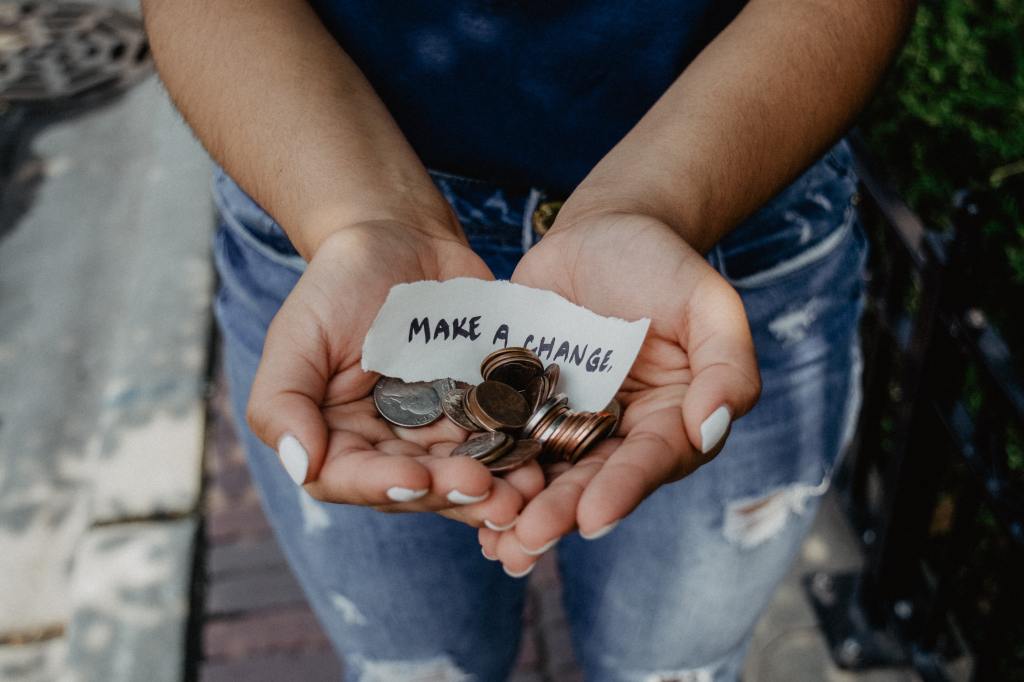
How you can help: Donate food, donate time, donate money.
Donate Non-Perishable Food: boxed meals, canned foods (meat, veggies, fruit), cooking oils, dried herbs and spices, granola bars, instant mashed potatoes, pasta, rice, shelf-stable milk, whole grain cereal, are a few examples. Avoid Donating: items packaged in glass, or cellophane. Go the extra mile: Call your local food bank and ask what items they are in need of, before donating.
Donate time: Some food banks rely heavily on volunteers especially during the colder seasons. Transporting, prepping, and serving food are all jobs that can make a huge impact on many families, children, veterans, chronically ill, and elderly in your community.
Donate Money: whether it be a monthly donation or a one time gift, every dollar is appreciated. Just a donation of 5 dollars provides an entire meal, and then some. Stocks and mutual funds can also be donated. Contact your financial advisor and the charity you wish to donate to for the information needed. Most organizations are able to take donations by phone, mail, or online.
Food insecurity is a year round issue. Although the winter season is known for the season of giving, consider donating any time of year. Any, and all help is appreciated.
Find a food bank near you or donate to Feeding America. Feeding America is the largest hunger relief charity in the United States. I am not affiliated or sponsored by Feeding America. For more information, other facts visit feedingamerica.org or click on their logo below.
How do you help combat hunger in the United States? We would love to hear your story! Please share in the comments below.
Trying to be “perfect” with a chronic illness is impossible. However, being open to learning about yourself, and adapting to your ever-changing situation, can help you thrive in ways that may seem unattainable. Here are three basic things that greatly help manage living with chronic illness.
Turn Bad Days Into Good Data
There are no avoiding bad days when you have a chronic illness. There is no doubt that a bad day can cause feelings of anger, frustration, and grief when losing another day to your condition.
One way we can turn them into a positive is by learning everything we can about those days. Analyze your day or week leading up to that bad day. Was it food, lack of sleep, and/or activity that triggered this bad day? If you are not sure, keeping track will help you see patterns you never noticed before.
Sometimes with chronic illness bad days happen for no particular reason. But perhaps you can find something that you have the ability to manage. Changing that one thing can perhaps decrease the frequency and severity of the bad day.
A health journal can be an ally in tracking your ups and downs. You can create a diary on paper, or look for apps that fit your needs. Along with tracking the “what went wrongs” do not forget to note the “what went rights.” Remembering to mark those positives can help maintain perspective.
Treat Your Emotional Health, Not Just Your Physical Health
With chronic illness you more than likely have been prescribed medication (or several) to treat your physical health. You have maybe changed your routine, or added an activity in your life to help cope with your chronic illness. But have you added anything to help improve your mental health?
Sometimes people feel like we must hide our illness, or just “tough it out” but that can be extremely detrimental to your mental health. Along those same lines, mental health can be extremely detrimental to your physical health.
Take the time to acknowledge your emotions, so that you can deal with them in a healthy way. If you are unsure how to start, reach out to a professional to help guide you in your mental health journey.
Be Forgiving
Would you treat a friend badly because they had to cancel plans because of their chronic illness? I assume not. So why would you be down on yourself when you have to? Treat yourself how you would treat a good friend in the same situation.
Replace judgemental thoughts with love and forgiveness. When you catch yourself saying or thinking a negative thought, stop, and reframe the thought. For example, I find myself thinking “I’m so pathetic” quite often.
When I catch myself in those moments I stop, take a breath, and change that thought. “I may not have been able to open the jar, but I tried, and asked for help when I needed it. And for that, I am proud of myself.” This may seem difficult at first, but the more you practice, the easier it becomes. Eventually, you may even find yourself skipping the negative thought in the first place!
It was early, the sun was shining ☀️, the birds were singing 🐦. But I must have gotten out of bed on the wrong side. Every little thing was irking me. My partner was complaining about his back, again. He was trying to help me with something on my phone and all I could focus on was his coffee breath. ☕ Dallas went out to pee, and he was sniffing the bush for what I thought was for-ev-er. My partner even told me he donated $100 to a local 8-year-old rock climber, who was crushed by a boulder and lost her leg. All I got was annoyed that he didn’t use his $100 elsewhere. (Like for food for people during this Covid time? Not sure I actually had an idea in mind. Again, I was just being a grouch.) That’s what I knew I needed an attitude adjustment. How can any human be annoyed from somebody helping an eight year old girl in need? Had I suddenly turned evil overnight? Most likely not, I just desperately needed a change in mindset. 🧠
So how do we help ourselves when we feel that the world cannot do anything right?
Be aware of your words and your actions. The good news is that you realize you are grumpy. And grumpy might be an understatement… However you have the advantage here because you can recognize this. Keep that awareness; be very careful how you treat and talk to the people around you. Try to keep in mind that they are not meaning to annoy or hurt. Unless you have been very mean to them already, I’m sure they don’t even know that you’re feeling this way. You can inform them that you need a little bit of space in order to get yourself back to a not easily activated state. Be honest, tell them that there is nothing that they can do. It is best to just let you have your space at this time.
Change your atmosphere. Okay so you can’t quite just get back into bed, close your eyes, open them and literally get out on the other side of the bed, and all will be fixed. But you can change the environment that you’re in right now. If you can be outside, and breathe some fresh air, do so. Let some sun beams melt that ice on your heart. 😎 But please wear sunscreen!
Do one activity that you know always makes you happy. You know that one scene in the movie that always makes you laugh out loud? Watch that scene. Do you have a video game that you can immerse yourself in and remove yourself from reality for a moment? Play it. Are you a workout junky that gets that endorphin kick when you do 2000 jumping jacks? Jump away! Read more about how movement matters to improve mood.
Fake it ’till you make it. A wiser fella than myself once said: start with the actions, and the feelings will follow. Start with a small grin. Voice appreciation for the small things. Soon you may find yourself truly smiling and aware of the better, brighter day you are having. 🌞
How do you usually turn your frown upside down? If you use any of these tips, let us know in the comments!
We all have said, and done things that we regret. We know we messed up. So how do we start the apology process? Sometimes it seems impossible.
If we break down the process into steps, and gather our emotions, it’s not.
Here are five ways to communicate that you are sorry, and have the other person feel your sincerity.
Express your regret or remorse. Something happened, and it didn’t turn out well. How do you feel about what happened? Were your actions something regretful? Do you feel utterly empty without the other party’s presence in your life? Be honest and open about how you feel about the result of what happened.
Explain what you think went wrong (without pointed phrases). Pointed phrases are statements that shift responsibility to the other party. They invalidate the other person’s feelings. An example of a pointed phrase is “I’m sorry that you were offended” or “I’m sorry, but you…” They have every right to feel what they feel, as do you. As much as you wouldn’t want them to dismiss your feelings, don’t dismiss theirs.
Request forgiveness and allow as much time as the other needs to process their emotions. Putting a time limit, or expressing an expected date of when the other person should forgive you, will most likely cause the other person to not want to even begin the forgiveness process.
Before composing: Give yourself time to be in a space where you feel ready and able to apologize. Being sincere is more important than rushing an apology. Emotions of remorse best translate in a face to face interaction. in times of COVID-19, that may not be an option, but consider a video visit. Likewise, just your voice can convey sincerity over the phone.
If you want to say sorry but feel like an in person or over the phone apology would cause more issues (ie. Interruptions, raised voices), a hand written one is better than none. No deed is too small if the relationship is worth restoring.
You are ready forgive/apologize, and move forward. How do you know the other party is ready? You won’t necessarily know. But don’t let assuming that the other party is not ready to forgive, hold you back from reaching out with an apology.
Do you feel like you need to apologize to someone? Are you going to use the tips above? Let us know, in the comments, how your apology was accepted (or denied).
I am an avid plant lover. At any given time I have at least three different plants propagating somewhere on my window sills. These little green buddies do so much more for me than I realize. Here are some ways plants may help you too.
Light.
The south side of my house a lot of bright and beautiful sunlight, however at the north side of my house is particularly dark and dungeon like. My office sits on the north side, and now that I’m working from home, I am impacted by the low light.
I forced myself to put three plants that require a moderate amount of sunlight in my office area. So now I don’t feel like I am opening the shades purely for me, but I have a responsibility to my little buddies to keep them happy. With the past weeks of opening the blinds for them I have seen an improvement in my mood.
Sunlight deprivation is a proven emotional affect on humans health and well-being. The concept of seasonal affectiveness disorder, is known through the low light (winter) months. But now through COVID 19 and forced time inside, sunlight is just as important.
How many plants can you fit in a south facing window?
Color.
Even if you have a monochromatic themed decor in your home. Pops of color in plants can affect your mood. Some Research believes that it has to do with the wavelength of the color itself, in combination with a person’s individual history.
Higher frequency wavelengths tend to create higher energy emotions while lower frequency wavelengths create lower energy emotions. However, if culturally a color symbolizes something specific that can change the mood output.
For example, blue is a low frequency color that can cause calming affect. But in Mexico blue can indicate mourning, so blue may cause slight distress to someone from that culture.
Even if the plant itself is not colorful, you can add plant décor!
In western culture these colors are found to be related to these moods:
So thinking about using plant color in your home, think about the energy you want in that room. Your office may want plants with reds, yellows and greens to get you pumped, confident and progressive. On the contrary, in your bedroom you may want plants with blues and whites for an area ready for relaxation and good dreams.
Life.
Plants in your space give you that sense of simbiosis with the CO2 cycle. Plants breathe in carbon dioxide, and emit oxygen. They help freshen the atmosphere of your home, but they also improve the atmosphere of the whole entirety of the Earth! How cool is that?! Their leaves secret and absorb moisture, so they help regulate the humidity in your home. Our bodies pick up on these regulations of the air and physically improve our life.
So if you’re looking for a quick fix to help reduce your stress, improve your mood, and create a healthier living space, your answer is: plants.
Blooming Christmas Cactus featured on @epil.epsy.ogue (Instagram)
Be sure to do your research on choosing the correct plant for your sunlight availability, temperature ranges, maintenance requirements, and pet safety if you have one living in the home.
Do you have plants in your home? What are you favorite plants that bring you peace and happiness? Share in the comments below.
My chronic illness causes constant fatigue. My body is battling itself from the inside, and it’s hard to deal with anything on the outside. Housework falls by the wayside; it is just too hard to make things happen. Everyday I got to see things getting piled up larger and larger, waiting for the time that I felt good enough to do something about it. And that time rarely comes.
One day I took a good long look at my house, and my life, and finally decided I needed to do something drastic to help me. What I ended up looking in to, was minimalism. At first I thought, “how ridiculous? I love the majority of my items in my home, I will never be able to part with them. I should just give up now.”
As I read, I found minimalism didn’t mean living with nothing, it meant living with less.
Research shows brain fatigue increases when it has to process more in an environment. Brain fatigue means body fatigue. Studies have found that clutter in a space raises cortisol levels. Cortisol is your stress hormone. Therefore clutter hits you with a double whammy, to your physical and mental health.
The more I thought about it, the more it started to look good for my epileptic brain. With things being simplified and reduced in my house, my brain would not need to use as much energy (because it really does not have any to spare).
So, this is where we started.
Chalk board reminder if our Keep It Conditions.
Set some guidelines to help you out with the decision making process of what to keep, donate, or trash. Actually write these down, so that you have something visual to reference. Our guidelines are:
Have I used this in the last year? Will I use it in the upcoming year?
Can it be replaced for less than or equal to $20? Can it be borrowed?
Would I purchase this item again?
Is this living out the purpose for which it was created? Or have I found a better use for this and it is currently doing its job?
Am I keeping it out of guilt?
if I had the opportunity, would I sell it in a yard sale?
My largest collection that sparks joy is my wardrobe. I love my clothing. I do not buy an item of clothing that will not create at least three complete outfits with the clothing items that I currently have. I am truly a curator. 💁🏽♀️
However, I do hold onto my items of clothing for decades. I’m not kidding, I have T-shirts that I wore in the 5th grade. (And yes they do still fit; I went through a very early growth spurt, and then never grew again.)
So some items of clothing are clearly made for a younger person, and I am holding on to them purely for selfish nostalgia. That is where those questions come in. “Could someone else use or love it more?”
Two bags of clothes ready for donation next to Al the avocado plant.
Most definitely, yes.
I feel better knowing that I’ve donated them and somebody else will wear and love them the way they should be loved.
The majority of my newer wardrobe has been left untouched, but a lot of other items have been donated, easing the stress of both me and the bar that holds my clothes!
Onion method is not called The Onion method because it’s stinky and makes you cry, it is because you focus on your house layer by layer. Start with the large items, or the items that you can easily identify that do not belong in that space.
Here are some items I found in my living room.
Left to right: Hair tie, Jack-o’-lantern necklace, mailbox key, kangaroo pencil, camera lense cover.
It is September, so that Halloween necklace has been out for almost a year. How embarrassing! 🤦🏽♀️ But it has a home in the Halloween decoration box in storage. The extra camera cover belongs in the camera bag, the pencil belongs in the office, the hair tie belongs in the bathroom, and the mailbox key belongs in the key bowl. And done! That’s five things already cleaned out of my living space! Small victory, but it feels pretty good.
Starting in the space where the smallest amount of work, makes the most visually impactful change, can be a great kickstarter. We donated a lot of clothes, but we don’t get to admire the closet like the clear space in the living room.
It is the room we hang out in the most as a family. Moving those 5 items made a clear open space that I can admire while the family spends time together. And this can be now more quality time because none of us are distracted by the mess that we are surrounded by.
The 15 minute rule. Limit yourself to 15 minutes at a time. Set a timer, and work consistently for that 15 minutes. If that is all you can manage for that day, it is absolutely fine, you did an amazing job.
Metallic Sandtimer – Not 15 mins.
In the beginning, that’s all I could manage. My body would get fatigued, or I just felt that I could not bring myself to do any more work. But I quickly found myself able to extend that 15 minutes. And not only physically I was able to, but I actually wanted to!
I’m not too sure if simplifying will help me as drastically as others. Regardless, I am sure that the benefits, no matter how small, would be worthwhile.
This is where we will start. I’ll give updates about this journey. I hope you are as excited as we, to find where this experiment brings us!
What is the level of clutter in your house? Do you have any tips on how to simplify that you find helpful? Let us know if you try any of the methods above, and how well it worked for you!














 Epil(epsy)ogue