3 Must Do’s When Living With a Chronic Illness

Trying to be “perfect” with a chronic illness is impossible. However, being open to learning about yourself, and adapting to your ever-changing situation, can help you thrive in ways that may seem unattainable. Here are three basic things that greatly help manage living with chronic illness.

Turn Bad Days Into Good Data

There are no avoiding bad days when you have a chronic illness. There is no doubt that a bad day can cause feelings of anger, frustration, and grief when losing another day to your condition.

One way we can turn them into a positive is by learning everything we can about those days. Analyze your day or week leading up to that bad day. Was it food, lack of sleep, and/or activity that triggered this bad day? If you are not sure, keeping track will help you see patterns you never noticed before.

Photo by Isaac Smith

Sometimes with chronic illness bad days happen for no particular reason. But perhaps you can find something that you have the ability to manage. Changing that one thing can perhaps decrease the frequency and severity of the bad day.

A health journal can be an ally in tracking your ups and downs. You can create a diary on paper, or look for apps that fit your needs. Along with tracking the “what went wrongs” do not forget to note the “what went rights.” Remembering to mark those positives can help maintain perspective.

Treat Your Emotional Health, Not Just Your Physical Health

With chronic illness you more than likely have been prescribed medication (or several) to treat your physical health. You have maybe changed your routine, or added an activity in your life to help cope with your chronic illness. But have you added anything to help improve your mental health?

Photo by Mike Erskine

Sometimes people feel like we must hide our illness, or just “tough it out” but that can be extremely detrimental to your mental health. Along those same lines, mental health can be extremely detrimental to your physical health.

Take the time to acknowledge your emotions, so that you can deal with them in a healthy way. If you are unsure how to start, reach out to a professional to help guide you in your mental health journey.

Be Forgiving

Would you treat a friend badly because they had to cancel plans because of their chronic illness? I assume not. So why would you be down on yourself when you have to? Treat yourself how you would treat a good friend in the same situation.

Replace judgemental thoughts with love and forgiveness. When you catch yourself saying or thinking a negative thought, stop, and reframe the thought. For example, I find myself thinking “I’m so pathetic” quite often.

When I catch myself in those moments I stop, take a breath, and change that thought. “I may not have been able to open the jar, but I tried, and asked for help when I needed it. And for that, I am proud of myself.”
This may seem difficult at first, but the more you practice, the easier it becomes. Eventually, you may even find yourself skipping the negative thought in the first place!

What are your “must do’s” in living with a chronic condition? Do you practice any of the above? Let me know in the comments below!

Create the Perfect Apology With These Five Tips

‘Tis the season of forgiveness.

We all have said, and done things that we regret. We know we messed up. So how do we start the apology process? Sometimes it seems impossible.

If we break down the process into steps, and gather our emotions, it’s not.

Here are five ways to communicate that you are sorry, and have the other person feel your sincerity. 

Express your regret or remorse. Something happened, and it didn’t turn out well. How do you feel about what happened? Were your actions something regretful? Do you feel utterly empty without the other party’s presence in your life? Be honest and open about how you feel about the result of what happened.

Explain what you think went wrong (without pointed phrases). Pointed phrases are statements that shift responsibility to the other party. They invalidate the other person’s feelings. An example of a pointed phrase is “I’m sorry that you were offended” or “I’m sorry, but you…” They have every right to feel what they feel, as do you. As much as you wouldn’t want them to dismiss your feelings, don’t dismiss theirs. 

Request forgiveness and allow as much time as the other needs to process their emotions. Putting a time limit, or expressing an expected date of when the other person should forgive you, will most likely cause the other person to not want to even begin the forgiveness process. 

Before composing: Give yourself time to be in a space where you feel ready and able to apologize. Being sincere is more important than rushing an apology. Emotions of remorse best translate in a face to face interaction. in times of COVID-19, that may not be an option, but consider a video visit. Likewise, just your voice can convey sincerity over the phone. 

If you want to say sorry but feel like an in person or over the phone apology would cause more issues (ie. Interruptions, raised voices), a hand written one is better than none. No deed is too small if the relationship is worth restoring.

You are ready forgive/apologize, and move forward. How do you know the other party is ready? You won’t necessarily know. But don’t let assuming that the other party is not ready to forgive, hold you back from reaching out with an apology.

Do you feel like you need to apologize to someone? Are you going to use the tips above? Let us know, in the comments, how your apology was accepted (or denied).

How plants help brighten your day.

I am an avid plant lover. At any given time I have at least three different plants propagating somewhere on my window sills. These little green buddies do so much more for me than I realize. Here are some ways plants may help you too.

Light.

The south side of my house a lot of bright and beautiful sunlight, however at the north side of my house is particularly dark and dungeon like. My office sits on the north side, and now that I’m working from home, I am impacted by the low light.

I forced myself to put three plants that require a moderate amount of sunlight in my office area. So now I don’t feel like I am opening the shades purely for me, but I have a responsibility to my little buddies to keep them happy. With the past weeks of opening the blinds for them I have seen an improvement in my mood. 

Sunlight deprivation is a proven emotional affect on humans health and well-being. The concept of seasonal affectiveness disorder, is known through the low light (winter) months. But now through COVID 19 and forced time inside, sunlight is just as important.

Spider plant in a rounded terracotta pot near a window.
How many plants can you fit in a south facing window?

Color.

Even if you have a monochromatic themed decor in your home. Pops of color in plants can affect your mood. Some Research believes that it has to do with the wavelength of the color itself, in combination with a person’s individual history.

Higher frequency wavelengths tend to create higher energy emotions while lower frequency wavelengths create lower energy emotions. However, if culturally a color symbolizes something specific that can change the mood output. 

For example, blue is a low frequency color that can cause calming affect. But in Mexico blue can indicate mourning, so blue may cause slight distress to someone from that culture.

Jade plant in decorated terracotta pot.
Even if the plant itself is not colorful, you can add plant décor!

In western culture these colors are found to be related to these moods:

  • Red – power, strength
  • Blue – healing, calm
  • Yellow – energy, stimulation
  • Green – luck, progress (green means go)
  • Black – sophistication, mystery
  • Purple – spirituality, wealth (epilepsy awareness!)
  • White – peace, clarity

So thinking about using plant color in your home, think about the energy you want in that room. Your office may want plants with reds, yellows and greens to get you pumped, confident and progressive. On the contrary, in your bedroom you may want plants with blues and whites for an area ready for relaxation and good dreams.

Life.

Plants in your space give you that sense of simbiosis with the CO2 cycle. Plants breathe in carbon dioxide, and emit oxygen. They help freshen the atmosphere of your home, but they also improve the atmosphere of the whole entirety of the Earth! How cool is that?! Their leaves secret and absorb moisture, so they help regulate the humidity in your home. Our bodies pick up on these regulations of the air and physically improve our life.

So if you’re looking for a quick fix to help reduce your stress, improve your mood, and create a healthier living space, your answer is: plants.

Christmas cactus with a pink bloom
Blooming Christmas Cactus featured on @epil.epsy.ogue (Instagram)

Be sure to do your research on choosing the correct plant for your sunlight availability, temperature ranges, maintenance requirements, and pet safety if you have one living in the home. 

Do you have plants in your home? What are you favorite plants that bring you peace and happiness? Share in the comments below.

How to Use Movement to Improve Your Mood.

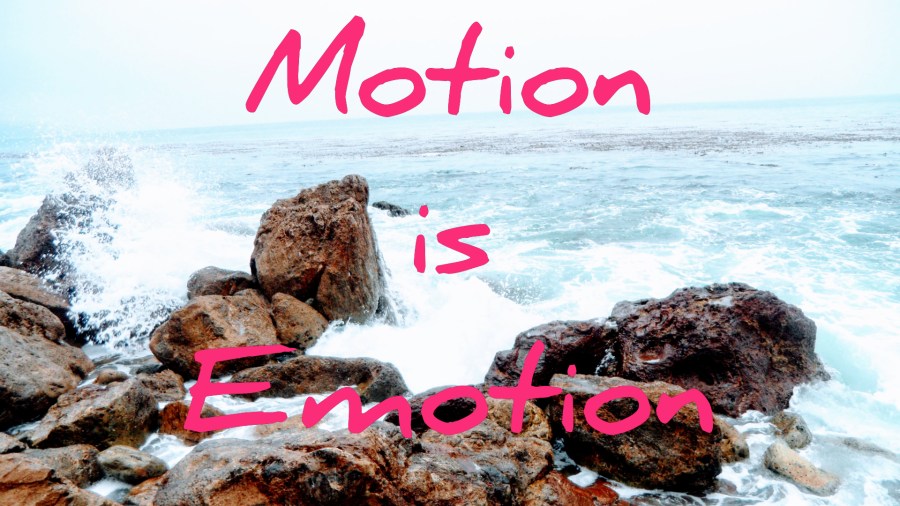
Motion is emotion.

When I first heard this phrase, I quickly shrugged it off. It was a week of increased seizure activity, and that particular day was exceptionally challenging. Fatigue was causing my ability to move to almost be non-existent. My mood was so low I couldn’t fathom experiencing any other emotions. 

However, my partner, being the wonderful support he is, never left my side. He continued to remind me that motion is emotion. He was trying to encourage me to move up and out of the dark place I was in.

Shifting our thinking when feeling negative, anxious, or depressed can be a daunting task. When it comes to shifting our mindset, we remember my partner’s advice: motion is emotion.

Consider Newton’s first law of motion is a perfect example. “An object at rest stays at rest..” But this doesn’t mean it will stay like that forever. To jumpstart that movement, start with the basics.

Stick to the basics. Have you moved your body? Have you felt the sunshine on your face? Have you brushed your teeth? Have you had a meal/snack? Have you taken a shower?

Yes, these might seem like little things. But, these little things inspire bigger things. How?
Because they do matter. You may not be aware that they matter on most days. It is on that day that you feel your worst, that you can notice the biggest difference when you accomplish these little things. 

If you want to change the world, or even if you want to change your own world, you must start at the basics. Initiate that forward motion. referring back to Newton’s first law, it also says “…An object in motion stays in motion unless acted upon by an unbalanced force…”

Starting may be difficult, but continuing is easier. I promise; it’s physics. There may be times that an outside force (like seizures in my case) may slow, or halt your motion. But remember, motion is emotion. 

If you have read it this far, I want to remind you that you are amazing. And you have the ability to take care of yourself and tend to the basics. You are worth it and your mental health is worth it.

And when you complete the basics, just know that I am proud of you. I am grateful I have you to come along this journey… Join me won’t you?

What movement helps you when you feel stuck? Share your ideas in the comments.

Chronic Illness: Expectation vs. Reality

Managing social expectations can be difficult when you have a chronic illness. Social expectations of what your illness “should” be like, can be greatly influenced by things seen on TV and movies. Unfortunately, many illnesses and disabilities get portrayed in just one way. And that depiction can sometimes be the only experience of an illness or disability someone has in their life.

You may have seen commercials for new medications that  have actors portraying your chronic illness. Sometimes it is hard to see a person in the commercial doing all these things that you cannot. People in those commercials always seem to have a positive attitude about their condition. 

You might see things on social media of people accomplishing milestones that you’re worried you may never get to. It is okay to feel frustrated. It is okay to feel hurt by other people’s experiences. No two people, and no two journeys are alike. 

What can we do to help when we are feeling like that?

Recognize how strong you are. Say to yourself “this is really hard, but I am working on it.” You are here in this moment, and you know what that means? You have been brave enough to not give up or give in to your disability or chronic illness.

Allow yourself to feel frustration, disappointment, anger, etc. Don’t let somebody tell you that your emotions are bad or invalid. You are going to feel, however you are going to feel. Practice not pushing the emotion away, or pushing the emotion down. But also practice not clinging to that emotion or holding grudges. I say practice, because this will take time to get better at accomplishing.

Focus on what you know to be true in this moment. Try to avoid thinking only in extremes. For example “I never will” or “it is wrong that” or “it is not fair that” are parts of extreme thinking. Remind yourself of the good you have right now. Read more about stating your one good thing here.

Finish by thinking of pleasant things that you can do today that makes you feel good. And acknowledge how amazing and wonderful it is that you can do that. There are many activities that can bring joy that don’t require much effort, but can bring much joy. Can’t think of anything off hand? The following list contains Covid-19 restriction friendly suggestions.

  • Singing (regardless of talent level)

  • Talking with a friend (on the phone or in person)

  • Day dreaming (stick to good thoughts)

  • Gaming (board or video)

  • Playing with pets (this is good for them too)

  • Reading (books or blogs – like this one!)

  • Napping (one of my favorites)

  • Learning something new (language, hobby, musical instrument)


Here is my example of using the above technique: I see people who are days, months, and years seizure-free via social media. Right now in my life I’m lucky to go a couple of hours seizure-free. Therefore, I can feel quite discouraged and jealous at times.

But, the fact that I can help bring awareness about the different experiences people have with epilepsy, and other chronic illnesses makes me feel proud. Helping more of the general public be aware that not all epilepsy looks the same, is very rewarding. 

My hope is, with more education, social expectations will be more realistic. My truth in this moment is: I know I have the capability of reaching towards that goal, with this blog. It is hard, but I am working on it.

Having a chronic illness comes with a lot of unpredictability. You may not know what the future may hold. But together we can work on bringing more joy and comfort in the now.

What are some frustrations you experience with your, or a loved ones chronic illness? Do you think you will try what was discussed above in those moments? Feel free to share in the comments.